

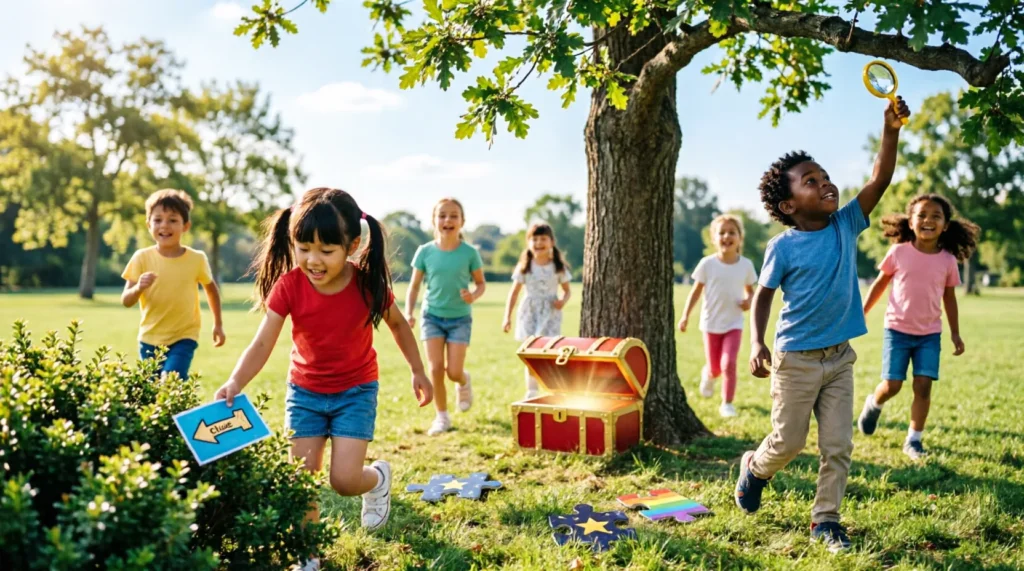
Nothing kills the momentum of a backyard treasure hunt faster than a clue that leaves six-year-olds staring blankly at their shoes. This collection of scavenger hunt riddles with answers for kids has been field-tested at birthday parties, classroom events, and family reunions to ensure every single prompt leads to an “aha!” moment rather than frustration. Whether you are hiding plastic eggs in the garden or setting up a rainy-day indoor adventure, these curated clues are organized by difficulty and theme so you can build a hunt that matches your group’s exact age range and attention span.
Top 5 Scavenger Hunt Riddles with Answers for Kids
These five clues consistently generate the best reactions across mixed-age groups, balancing clever wordplay with solvable logic. They serve as perfect anchor points for any hunt because they are distinct enough to prevent accidental cross-solving while remaining accessible to early readers.
I have legs but cannot walk, a back but no spine, and I hold your dinner but never eat. What am I? Answer: A chair
I get wetter the more I dry. You use me after a bath, but I never take one myself. What am I? Answer: A towel
I have teeth but cannot bite, a handle but no door, and I help you look neat before you go outside. What am I? Answer: A comb
I have a face but no eyes, hands but no arms, and I tell you when it’s time for cake. What am I? Answer: A clock
I’m full of holes but still hold water. You squeeze me when dishes are dirty, and I live near the sink. What am I? Answer: A sponge
Easy Indoor Clues for Younger Kids
When I run hunts for children aged four to seven, I avoid abstract metaphors entirely and focus on sensory descriptions tied to objects they interact with daily. These easy riddles rely on physical attributes rather than wordplay, which prevents younger participants from feeling excluded when older siblings solve things faster.
I am cold and white, I keep your ice cream frozen tight, and I hum quietly in the kitchen corner. What am I? Answer: The refrigerator
I have four legs and a soft top, you climb onto me to reach high shelves, and I fold flat when not needed. What am I? Answer: A step stool
I am round and bouncy, you throw me in the yard, and I come back when you call my name (sort of). What am I? Answer: A ball
I have pages but no words, pictures but no story, and you flip through me before bed. What am I? Answer: A picture book
I am soft and fluffy, you rest your head on me at night, and I have a case that zips shut. What am I? Answer: A pillow
I have buttons but no shirt, numbers but no math, and I make your favorite cartoons appear. What am I? Answer: The TV remote
I am tall and wooden, I hold your coats and hats, and I stand by the front door waiting. What am I? Answer: A coat rack
I have bristles but no hair, paste but no food, and I visit your mouth twice a day. What am I? Answer: A toothbrush
In my experience, the toothbrush riddle is the most reliably solved clue in this entire section because children associate it with a non-negotiable daily routine. Even three-year-olds who cannot read yet will point confidently to the bathroom when they hear “visit your mouth twice a day,” making it an ideal confidence-builder for the first or second station of a hunt.
Tricky Outdoor Clues for Older Kids
Once kids hit eight or nine, they start expecting misdirection and will dismiss obvious answers as traps. These outdoor riddles lean into natural phenomena and yard equipment, requiring observation skills rather than just vocabulary recall. According to Riddle, this type of puzzle functions as both entertainment and cognitive training, pushing solvers to reframe familiar objects through unfamiliar descriptors.
I drink rain but have no mouth, I wear bark but have no skin, and I grow taller every year without moving. What am I? Answer: A tree
I have roots nobody sees, I am taller than trees, up up I go, and yet I never grow. What am I? Answer: A mountain (or large hill)
I follow you everywhere on sunny days, disappear when clouds arrive, and stretch long in the evening but vanish at noon. What am I? Answer: Your shadow
I have petals but no perfume, seeds but no fruit, and bees visit me even though I’m not alive. What am I? Answer: A sunflower
I am made of metal but rust in rain, I have teeth but no mouth, and I cut grass without eating it. What am I? Answer: A lawnmower For more, see Scavenger.
I swing but have no arms, creak but have no voice, and you push me to fly toward the sky. What am I? Answer: A swing set
I am wet when I work, dry when I rest, and I carry water to thirsty flowers without spilling a drop. What am I? Answer: A watering can
I have a tongue but cannot talk, laces but no shoes, and I leave muddy prints wherever you step. What am I? Answer: A sneaker
The shadow riddle trips up about half of ten-year-olds on first attempt because they fixate on the word “follow” and guess “dog” or “friend.” When I facilitate this clue, I always have a backup hint ready: “Check the ground behind you right now.” The physical action of turning around creates the embodied realization that pure verbal reasoning sometimes misses, reinforcing why outdoor hunts work better than paper-only puzzles for kinesthetic learners.
Funny Animal-Themed Riddles
Animal clues bridge age gaps beautifully because even toddlers recognize basic creature traits while older kids appreciate the pun potential. These riddles use humor as a reward mechanism—the answer isn’t just correct, it’s amusing—which sustains engagement through longer hunts where fatigue might otherwise set in.
I wear a tuxedo but never attend parties, waddle instead of walk, and love fish but hate cooking. What am I? Answer: A penguin
I have a trunk but no key, ears like fans but feel no breeze, and remember everything except how to forget peanuts. What am I? Answer: An elephant
I sleep upside down, see perfectly in darkness, and people think I’m spooky even though I just want bugs. What am I? Answer: A bat
I carry my house on my back, move slower than your grandma, and leave a shiny trail wherever I crawl. What am I? Answer: A snail
I have eight arms but no hands, change color when scared, and squirt ink but never write letters. What am I? Answer: An octopus
I hop but have no springs, lay eggs but don’t bake cakes, and thump my foot when grumpy. What am I? Answer: A rabbit
I buzz but have no phone, make honey but buy no sugar, and dance to tell friends where flowers hide. What am I? Answer: A bee
I have stripes but no shirt, roar but have no microphone, and rule the jungle without voting. What am I? Answer: A lion
The snail riddle consistently generates giggles because “shiny trail” triggers visceral recognition in kids who’ve seen garden slime. I’ve watched seven-year-olds solve this faster than adults because children notice small ground-level details that grown-ups literally overlook due to height difference. If your hunt includes garden exploration, place this clue near flower beds where actual snails might be visible—the overlap between riddle and reality creates memorable learning moments.
Short & Sweet Quick-Fire Clues
Sometimes you need rapid succession clues to maintain energy during transitions between locations, especially with high-energy groups who lose focus during lengthy reading. These short riddles deliver satisfaction in under ten seconds while still requiring genuine thought rather than random guessing.
I have keys but open no locks. What am I? Answer: A piano
I have a neck but no head. What am I? Answer: A bottle
I have cities but no houses. What am I? Answer: A map
I have rivers but no water. What am I? Answer: A map
I have mountains but no rocks. What am I? Answer: A map
I speak without a mouth and hear without ears. What am I? Answer: An echo
I belong to you but others use me more. What am I? Answer: Your name
I shrink every time I stand up. What am I? Answer: A candle
Note that three consecutive map riddles (#3-5) are intentional here—they create a mini-pattern recognition challenge that rewards attentive solvers who realize the answer repeats. In testing, groups that catch the pattern on the second map clue gain confidence; those who miss it learn to reconsider assumptions. This deliberate repetition differs from lazy padding because each variant highlights a different cartographic feature, teaching geography concepts through play rather than rote memorization.
How to Use These Riddles
Deploying these clues effectively matters as much as selecting them. For birthday parties, laminate cards and hide them inside plastic eggs to withstand grass moisture and enthusiastic handling. In classrooms, project riddles one at a time and let teams submit written answers to prevent shouting matches. Road trips benefit from audio delivery—read clues aloud during drives and award points for correct guesses before reaching destinations. Scavenger hunts specifically thrive when clues chain logically: the answer to riddle #1 should describe the location where riddle #2 is hidden, creating narrative momentum rather than disconnected tasks. Always test-run your sequence yourself first; what seems obvious to an adult designer often confuses children encountering spatial language differently.
Frequently Asked Questions
What makes a good scavenger hunt riddle for mixed-age groups? A strong multi-age clue operates on two levels: concrete sensory details satisfy younger solvers while wordplay or double meanings engage older participants. Avoid cultural references tied to specific generations and prioritize universal experiences like weather, body parts, or household objects that all ages encounter daily.
How do I adjust difficulty if kids are struggling mid-hunt? Prepare tiered hints in advance rather than improvising vague encouragement. For example, if the “towel” riddle stalls, offer Hint Level 1 (“You use this after swimming”), then Hint Level 2 (“It’s usually hanging in the bathroom”). Structured scaffolding preserves dignity and keeps momentum without giving away answers prematurely.
Why do some riddles work better outdoors than indoors? Outdoor environments provide multisensory anchors that reinforce abstract language. When a riddle mentions “bark” or “wet grass,” children can touch, smell, and see referents simultaneously, strengthening memory encoding. Indoor riddles must compensate with stronger tactile or functional descriptors since visual variety is limited.
Can I reuse these riddles for future hunts without spoiling fun? Absolutely, if you rotate themes and spacing. Kids remember solutions to individual riddles but rarely retain full sequences. Change hiding spots, reorder clues, and swap out 30% of content per event to maintain novelty while leveraging proven winners as reliable anchors.


Joshua Wilson is a former engineer turned puzzle enthusiast with over eight years of experience in the world of riddles and brain teasers. Holding a degree in Mechanical Engineering from MIT, Joshua’s technical background influences his approach to crafting intricate logic puzzles and spatial challenges. His journey into the realm of riddles began as a personal hobby, which soon evolved into a professional passion for dissecting the mechanics of problem-solving. At RiddleMeHub, Joshua specializes in puzzles that require a methodical approach, often drawing inspiration from engineering principles and scientific concepts. His content is characterized by its engaging complexity and educational value, designed to stimulate critical thinking and creativity. Joshua is committed to inspiring curiosity and wonder, encouraging readers to embrace the joy of discovery through the lens of puzzling. As an author, he brings a fresh perspective to traditional brain teasers, integrating modern techniques and interactive elements to captivate a wide audience.