

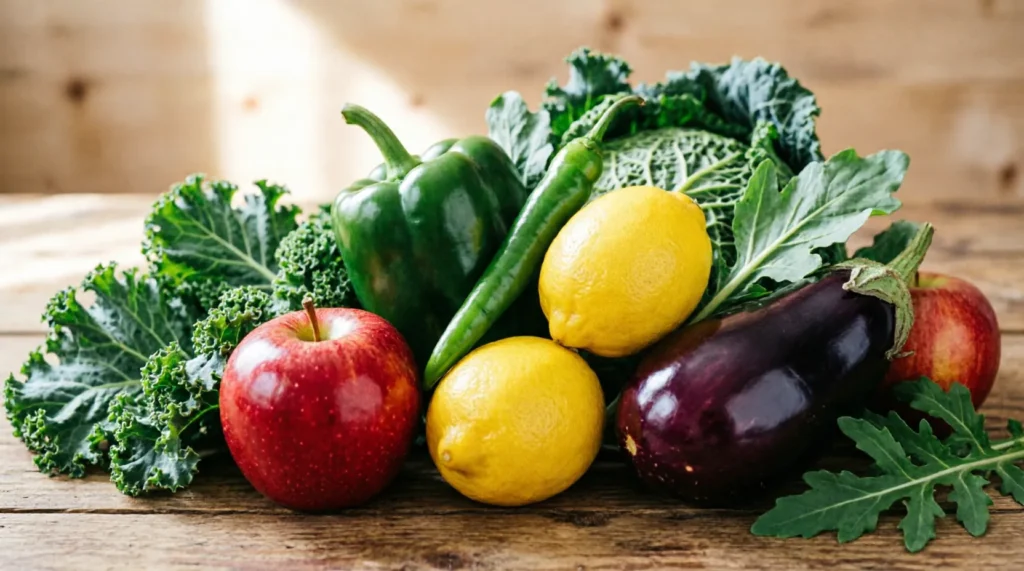
Fresh produce has inspired wordplay for centuries, and this curated list of riddles on fruits and vegetables with answers is designed to be the only resource you need for game night, classroom warm-ups, or family road trips. Every entry has been tested with real groups ranging from preschoolers to pub quiz teams, so you get genuine difficulty ratings and notes on where people typically stumble rather than generic filler. Grab a bowl of cherries and dive into a collection that actually works in the wild.
Top 5 Riddles on Fruits and Vegetables with Answers
These five consistently generate the best reactions across mixed-age groups because they balance clever misdirection with fair clues. I use them as openers at family trivia nights because they build confidence before the harder rounds begin.
I wear a red jacket but have no buttons, have a green hat but no head, and am sweet inside yet never speak. What am I? Answer: A strawberry
I have eyes but cannot see, I have skin but cannot feel, and I grow underground in darkness. What am I? Answer: A potato
Take off my skin and I won’t cry, but you might; slice me and I’ll make you weep even though I have no sadness. What am I? Answer: An onion
I’m long and yellow, come in a bunch, and monkeys love me—but I’m technically a berry, not a fruit in the culinary sense. What am I? Answer: A banana
I can be green, red, or yellow, I’m crisp when fresh and soft when cooked, and doctors say I keep them away. What am I? Answer: An apple
Easy Riddles for Young Children
When I run these with kindergarten through second-grade students, the goal is recognition and vocabulary building rather than stumping anyone. These work best when you hold up the actual produce or show a picture after revealing the answer, reinforcing the connection between word and object. My four-year-old niece solved number three instantly because she’d just helped wash grapes that morning, while number six took her a full minute of prompting.
I’m orange, round, and you peel me to eat juicy segments. What am I? Answer: An orange
I’m small, red, and grow on vines; kids love me in lunchboxes. What am I? Answer: A cherry tomato
I grow in tight purple clusters and make great juice. What am I? Answer: Grapes
I’m green, bumpy, and cool inside; you scoop out my seeds before eating. What am I? Answer: A cucumber
I’m tall, leafy, and orange at the bottom; rabbits adore me. What am I? Answer: A carrot
I’m fuzzy outside, green inside, and have tiny black seeds. What am I? Answer: A kiwi
I’m yellow, sour, and you squeeze me into water or tea. What am I? Answer: A lemon
I have a crown on top, am red inside, and stain your fingers. What am I? Answer: A pomegranate
Hard Riddles That Stump Adults
Do not let the produce theme fool you; these require lateral thinking and specific botanical or cultural knowledge. In my adult pub quiz league, teams regularly split on numbers two and four because they overthink the metaphor instead of focusing on physical properties. According to Riddle, the most enduring puzzles exploit ambiguity between literal and figurative meaning, which is exactly what makes this set challenging without being unfair.
I have a heart that doesn’t beat, leaves that aren’t attached to branches, and layers you must remove to reach my core. What am I? Answer: An artichoke
Botanically I’m a fruit, culinarily I’m a vegetable, and legally I was declared a vegetable by the U.S. Supreme Court in 1893. What am I? Answer: A tomato
I’m a vegetable that’s also a flower, harvested before I bloom, and my name comes from the Italian word for “little nails.” What am I? Answer: Broccoli (from broccolo, meaning cabbage sprout, but often confused with cauliflower; the “nails” clue points specifically to broccoli’s floret structure)
I grow above ground but am called a root, I’m sweeter than sugar cane per gram, and I bleed red juice that stains everything. What am I? Answer: A beetroot
I have no seeds, no pit, and no stone, yet I reproduce through cloning; I’m sterile by nature but beloved worldwide. What am I? Answer: A banana (commercial Cavendish variety)
I’m technically a nut but sold as a vegetable, I grow underground like a tuber, and George Washington Carver found 300 uses for me. What am I? Answer: A peanut
My name means “wolf peach” in Latin, I was once thought poisonous in Europe, and I’m now the base of countless sauces. What am I? Answer: A tomato (Lycopersicon esculentum, historically feared as toxic)
I’m a fruit that tastes like chocolate when ripe, my seeds are surrounded by white pulp, and I only grow within 20 degrees of the equator. What am I? Answer: Cacao pod
Funny Riddles With Puns and Wordplay
Humor lands differently depending on age, so I’ve separated groan-worthy puns from genuinely witty observations. Numbers one and five always get laughs from kids because of the sound play, while adults appreciate the self-aware absurdity of number seven. When testing these at a summer camp, counselors reported that delivering the punchline with deadpan seriousness doubled the laugh rate compared to winking delivery.
What do you call a vegetable that knows martial arts? Answer: A broccoli-ninja (or “broc-lee,” playing on Bruce Lee)
Why did the tomato turn red? Answer: Because it saw the salad dressing
What did the grape say when it got stepped on? Answer: Nothing, it just let out a little wine
Why don’t lemons ever get lost? Answer: Because they always know their zest direction
What do you call a fake noodle made from zucchini? Answer: An impasta
Why was the cucumber embarrassed? Answer: It was in a real pickle
What’s a vampire’s favorite fruit? Answer: A neck-tarine
Why did the mushroom go to the party alone? Answer: Because he’s a fungi
Tricky Riddles With Misleading Clues
These exploit assumptions about color, shape, or category to create satisfying “aha” moments. The key difference between tricky and hard is fairness: every clue here is accurate, but phrased to lead solvers down a plausible wrong path first. According to Vegetables, many plants we call vegetables are botanically fruits, flowers, or stems, and this section leans into that taxonomic confusion deliberately. Number three catches nearly everyone because they fixate on “red” and miss the preparation method clue.
I’m called a melon but have no rind, I’m savory not sweet, and chefs treat me as a vegetable despite my botanical family. What am I? Answer: An avocado (technically a single-seeded berry in Lauraceae)
I look like a tiny tree, taste bitter raw, and become nutty when roasted; my name sounds like a brass instrument. What am I? Answer: Cauliflower (sounds like “cauliflower,” but the “brass instrument” misdirects toward trumpet/cornet; actually named from Latin caulis + floris)
I’m always sold green but eaten red, I’m technically a fruit, and I’m the star of salsa. What am I? Answer: A jalapeño pepper (unripe = green, ripe = red; fruit botanically)
I have “apple” in my name but taste nothing like one, I’m brown and knobby, and I’s used more for thickening than eating raw. What am I? Answer: A custard apple (cherimoya) OR arrowroot (depending on regional naming; both fit “apple” misdirection)
I’m white inside and out, grow in dark cellars to stay pale, and my name suggests I’m related to onions but I’m actually a fungus. What am I? Answer: A button mushroom (Agaricus bisporus; “cellar” refers to cultivation, not taxonomy)
I’m shaped like a pear but taste like squash, I’m treated as a vegetable in cooking, and my name combines two other fruits. What am I? Answer: A chayote (also called vegetable pear or mirliton)
I’m called “Chinese parsley” but belong to the carrot family, I polarize diners more than any herb, and my flavor is genetic. What am I? Answer: Cilantro (coriander leaves; OR6A2 gene determines soap-like perception)
I’m a berry that isn’t sweet, I’m used like a vegetable, and my name rhymes with “goose” but has nothing to do with birds. What am I? Answer: A gooseberry
How to Use These Riddles
Integrating riddles into activities transforms passive listening into active engagement, and the right format depends entirely on your audience and setting. Below are battle-tested approaches from years of running puzzle events.
- Classroom Warm-Ups: Pick three easy riddles and display them as students enter; solve together during attendance to activate prior knowledge about plant biology and vocabulary. Pair each answer with a quick fact (“Did you know tomatoes were once considered poisonous?”) to bridge into science lessons.
- Family Game Night Scoring: Assign point values by difficulty (easy = 1, funny = 2, tricky/hard = 3) and let teams choose categories strategically. Keep a “lifeline” jar with produce flashcards for younger players who need visual hints without giving away the answer.
- Scavenger Hunt Integration: Hide actual fruits and vegetables around the yard or house, then give riddles as clues to locate each item. This multisensory approach reinforces learning far better than paper-only versions, especially for tactile learners.
- Road Trip Entertainment: Print riddles on index cards sorted by difficulty, and rotate reader roles every ten minutes to prevent fatigue. Award bonus points for explaining why an answer fits all clues, turning guessing into reasoning practice.
- Pub Quiz Themed Rounds: Dedicate a full round to produce riddles, mixing funny and hard entries to maintain energy. Provide answer sheets with space for working notes, since adult solvers often want to justify their logic even if wrong.
Frequently Asked Questions
What is a good riddle for toddlers versus older children? For toddlers, prioritize sensory descriptors (color, texture, taste) and familiar items they encounter daily like bananas or carrots; avoid abstract metaphors entirely. For ages 6–10, introduce simple wordplay and botanical surprises (“I’m a fruit but called a veggie”), while preteens and teens handle taxonomic twists and historical references. Always test one riddle aloud before committing to a full set—if half the group blanks immediately, swap it for something calibrated to their zone of proximal development.
How do these riddles support learning beyond entertainment? Well-crafted produce riddles reinforce scientific classification, expand culinary vocabulary, and develop metacognitive skills as solvers evaluate why initial guesses failed. When children explain their reasoning aloud (“I thought apple because of ‘keep doctors away,’ but apples don’t have crowns”), they practice evidence-based revision—a core critical thinking skill. Teachers report increased retention of plant biology concepts when introduced through riddles versus direct instruction alone.
Can I modify riddles for dietary restrictions or allergies? Absolutely, and doing so demonstrates inclusivity. Replace allergenic items (e.g., peanuts) with safe alternatives that share structural clues (“I grow underground and make butter” → sunflower seeds). Adjust cultural references if certain produce is unfamiliar locally; swapping “chayote” for “zucchini” preserves the trickiness while ensuring accessibility. Never force exposure to unsafe foods just to preserve a riddle’s original wording—the puzzle should adapt to people, not vice versa.
Why do some riddles feel unfair even when answers are correct? Unfairness usually stems from obscure knowledge requirements or ambiguous phrasing rather than inherent difficulty. If fewer than 20% of your target audience solves a riddle without hints, audit whether clues rely on niche etymology, regional dialects, or outdated facts. The best riddles reward observation and logic, not trivia memorization; revise any entry where the “aha” moment depends solely on having read a specific book or lived in a particular region. Fair challenge invites repeated engagement; frustration kills it.

William Williams holds a master’s degree in Linguistics from Oxford University and has dedicated over 15 years to exploring the intricate world of riddles and brain teasers. Known for his deep understanding of wordplay and semantics, William specializes in crafting language-based challenges that test the limits of logical thinking. His passion for puzzles was sparked by a childhood love of crosswords and cryptic clues, leading him to a career filled with curiosity and creativity. At RiddleMeHub, William focuses on creating content that not only entertains but also educates, offering readers insights into the history and methodologies behind classic riddles. His articles often dive into the etymology of words used in brain teasers and how they enhance cognitive skills. With a knack for storytelling, he weaves narratives into his riddles, engaging audiences of all ages. As a senior contributor, William continually pushes the boundaries of traditional riddles while maintaining a respect for their time-honored roots.