

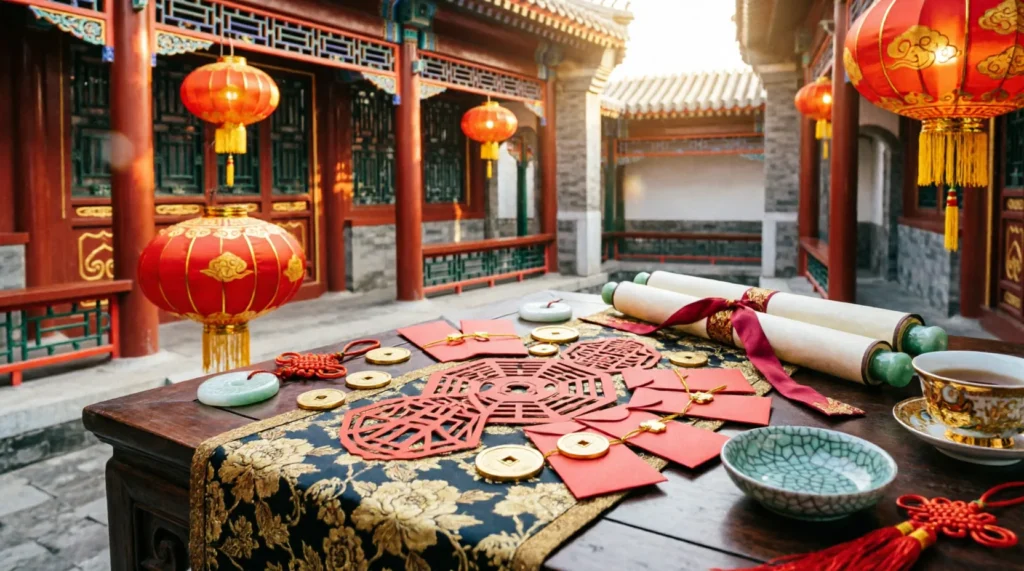
Gathering around the table for dumplings and red envelopes is a cherished tradition, but adding a layer of mental challenge can make the celebration even more memorable. This collection of lunar new year riddles with answers is designed to entertain guests of all ages, from curious children to grandparents who think they have heard every puzzle before. Whether you are hosting a reunion dinner or just looking for a fun activity to pass the time during the holiday break, these brain teasers capture the spirit of the season while sharpening your wits.
Top 5 Lunar New Year Riddles
These five riddles represent the cream of the crop, blending cultural symbolism with clever wordplay. They are perfect for kicking off a game night or breaking the ice at a family gathering.
I am red, I am bright, and I hold money tight. You give me to children to bring them good luck. What am I? Answer: A red envelope (Hongbao)
I have a face but no eyes, I have hands but no arms. I tick away the old year and welcome the new one. What am I? Answer: A clock
I am an animal that changes every twelve years. I am strong, hardworking, and often associated with the earth. Who am I? Answer: The Ox (or any specific Zodiac animal, depending on the current year, but this riddle describes the cycle itself)
I am made of rice, I am sticky and sweet. I am round like the moon and eaten for reunion. What am I? Answer: Tangyuan (glutinous rice balls)
I fly high in the sky, painted with dragons and phoenixes. I am held by a string and watched by crowds below. What am I? Answer: A kite
Easy Riddles for Kids
Younger participants can join the fun with these straightforward puzzles. They focus on recognizable symbols and simple logic, ensuring that children feel included and successful. When I test these with my niece’s kindergarten class, the “loud” riddle is always the first one they shout out because it connects directly to the firecrackers they hear outside.
I am loud and I pop. I am red and I hop. I scare away bad spirits with a noisy sound. What am I? Answer: Firecrackers
I am a fruit that sounds like “luck.” I am orange and round and often given as a gift. What am I? Answer: An orange (or tangerine)
I am a dance with a long body and many legs. I move through the streets with drums and gongs. What am I? Answer: A dragon dance
I am a flower that blooms in winter. I am pink or white and symbolize hope and renewal. What am I? Answer: Plum blossom
I am a meal where everyone sits together. We eat fish and dumplings and share stories. What am I? Answer: Reunion dinner
I am a color that is everywhere during the festival. I am on lanterns, envelopes, and clothes. What am I? Answer: Red
I am a light that hangs in the street. I am made of paper and silk and glows at night. What am I? Answer: A lantern
Hard Riddles for Adults
These puzzles require a bit more lateral thinking and knowledge of cultural nuances. They are ideal for adults who enjoy a challenge and want to move beyond the obvious symbols. I find that the “zodiac” riddle here often trips people up because they forget the mathematical pattern of the twelve-year cycle.
I am not alive, but I grow. I don’t have lungs, but I need air. I don’t have a mouth, but water kills me. I am lit during the festival to guide ancestors. What am I? Answer: A candle (or incense)
I am a word that means “surplus” or “abundance.” I am homophonous with “fish” in Mandarin. Eating me ensures you have extra wealth next year. What am I? Answer: Fish (Yu)
I am a creature of myth, not reality. I bring rain and power, and I am danced with by many people. I am not the lion. What am I? Answer: The Dragon
I am a plant that grows quickly and bends in the wind. I symbolize resilience and integrity. I am often painted in traditional art. What am I? Answer: Bamboo
I am a day that marks the end of the festival. I am the fifteenth day of the first lunar month. I am celebrated with lanterns and sweet rice balls. What am I? Answer: The Lantern Festival (Yuanxiao Jie)
I am a god of wealth who visits homes during the festival. I am often depicted holding a gold ingot. People open their doors to welcome me. Who am I? Answer: Caishen (God of Wealth)
I am a tradition where you clean your house before the new year. You sweep away bad luck so good luck can enter. What am I? Answer: Spring cleaning
Funny Riddles to Lighten the Mood
Humor is a universal language, and these riddles add a playful twist to the celebrations. They are great for breaking tension or getting a laugh from a group that has been solving puzzles for a while. My uncle always groans when he hears the “dumpling” riddle, but he admits it’s clever.
Why did the dumpling go to school? Answer: To get a little wrapper education!
What do you call a rabbit who tells jokes during the Lunar New Year? Answer: A funny bunny! (Or a hare-raising comedian)
Why don’t dragons play basketball during the festival? Answer: Because they are afraid of the net!
What is a cat’s favorite part of the Lunar New Year? Answer: The mouse-free zone! (Since the Rat is a zodiac sign, but cats chase mice)
Why did the red envelope go to therapy? Answer: It had too much inner tension (and cash)!
What do you call a snowman during the Lunar New Year? Answer: A chilli pepper! (Because it’s cold but spicy with festival heat)
Tricky Riddles with a Twist
These riddles rely on misdirection and double meanings. They are designed to catch people off guard, making the eventual answer feel satisfyingly clever. The “moon” riddle is particularly effective because people often overthink the astronomical aspect instead of focusing on the cultural symbolism.
I am full during the festival, but I am not a plate. I am bright in the sky, but I am not the sun. I influence the tides and the calendar. What am I? Answer: The Moon
I am a number that is considered lucky. I am not four, which is unlucky. I am often seen in prices and gifts. What am I? Answer: Eight
I am a sound that is silent until I am struck. I am made of metal and wood. I keep the rhythm for the lion dance. What am I? Answer: A drum (or gong)
I am a word that means “year.” I am also a creature that lives in the sea. I am not a fish. What am I? Answer: Nian (The mythical beast, and “Nian” sounds like “year” in Chinese)
I am a direction that is avoided when sweeping the floor on New Year’s Day. Sweeping towards me might sweep away good luck. What am I? Answer: Out the door (or outside)
I am a food that is shaped like a coin. I am eaten to attract wealth. I am not actually money. What am I? Answer: Jiaozi (Dumplings)
Animal Riddles Based on the Zodiac
The Chinese Zodiac is a central theme of the Lunar New Year, making animal riddles a natural fit. These puzzles highlight the traits of the twelve animals, encouraging players to think about personality characteristics and mythology. According to Riddle, riddles have long been used to test wisdom and wit, and these zodiac-themed puzzles continue that tradition by requiring knowledge of cultural archetypes.
I am first in the race. I am small but clever. I rode on the ox’s back to win. Who am I? Answer: The Rat
I am strong and steady. I work hard in the fields. I came second in the race. Who am I? Answer: The Ox
I am fierce and brave. I have stripes and power. I am the king of beasts. Who am I? Answer: The Tiger
I am gentle and quick. I have long ears and love carrots. I came fourth in the race. Who am I? Answer: The Rabbit
I am majestic and powerful. I control the rain and wind. I am the only mythical creature in the zodiac. Who am I? Answer: The Dragon
I am wise and mysterious. I have scales and can charm others. I came sixth in the race. Who am I? Answer: The Snake
I am energetic and free-spirited. I love to run and jump. I came seventh in the race. Who am I? Answer: The Horse
I am calm and kind. I enjoy comfort and good food. I came eighth in the race. Who am I? Answer: The Goat (or Sheep)
I am smart and playful. I love to climb and swing. I came ninth in the race. Who am I? Answer: The Monkey
I am proud and beautiful. I have a colorful tail. I came tenth in the race. Who am I? Answer: The Rooster
I am loyal and honest. I love to protect my home. I came eleventh in the race. Who am I? Answer: The Dog
I am happy and generous. I love to sleep and eat. I came last in the race. Who am I? Answer: The Pig
Short Riddles for Quick Games
Sometimes you need a quick puzzle to fill a short gap in conversation or to keep the energy high. These short riddles are concise and punchy, making them perfect for rapid-fire rounds. The concept of the lunar cycle itself is fascinating; as noted in Lunar, the moon’s phases dictate the timing of this festival, adding a celestial layer to the celebrations.
I am red and round. I am a fruit of luck. What am I? Answer: Orange
I am loud and bright. I light up the sky. What am I? Answer: Firework
I am soft and white. I am filled with sesame. What am I? Answer: Tangyuan
I am paper and light. I glow in the dark. What am I? Answer: Lantern
I am money and red. I am given with love. What am I? Answer: Hongbao
I am a dance and a costume. I am yellow and red. What am I? Answer: Lion Dance
How to Use These Riddles
Integrating these puzzles into your celebration can enhance the communal experience. Here are a few practical ways to use them:
- Dinner Table Icebreakers: Place a riddle card at each setting. Guests can try to solve them while waiting for dishes to arrive. It keeps the conversation lively and prevents awkward silences.
- Scavenger Hunt: Hide red envelopes around the house, each containing a riddle. Solving the riddle reveals the location of the next clue, leading to a final prize.
- Classroom Activities: Teachers can use these riddles to introduce cultural concepts. The animal zodiac riddles are particularly effective for teaching about the twelve-year cycle and character traits.
- Road Trip Entertainment: Keep passengers engaged during long drives to family gatherings. The short riddles are perfect for quick turns between siblings or friends.
Frequently Asked Questions
What is a good riddle for young children? Simple riddles involving visible objects like lanterns, oranges, or firecrackers work best. They should rely on direct observation rather than abstract wordplay. The “Easy Riddles for Kids” section above provides excellent starting points.
How do these riddles help with cultural learning? Riddles force players to engage with symbols and traditions actively. Instead of passively hearing about the zodiac or food customs, they must recall and apply that knowledge to solve the puzzle, reinforcing the information in a fun way.
Can I use these riddles for other Asian festivals? While specifically tailored for Lunar New Year, many riddles about dragons, lanterns, and the moon can be adapted for Mid-Autumn Festival or other celebrations. However, references to specific foods like tangyuan or traditions like hongbao are unique to the Lunar New Year period.
What is the hardest riddle in this collection? The riddle about “Nian” being both a word for “year” and a mythical beast is often the most challenging. It requires knowledge of linguistic homophones and folklore, making it a true test of cultural depth rather than just logic.

With a background in psychology and cognitive science from Stanford University, Sarah Jones brings a unique perspective to the world of riddles and brain teasers. With a decade of experience in the field, she specializes in understanding how puzzles can enhance cognitive development and mental agility. Sarah’s interest in riddles began during her undergraduate years when she researched problem-solving processes in the human brain. Her work at RiddleMeHub focuses on creating puzzles that are both challenging and beneficial for mental growth, often incorporating elements of math and logic. She writes extensively about the cognitive benefits of engaging with brain teasers, aiming to promote brain health and fitness through fun and challenging content. Sarah’s contributions to the site include themed puzzle collections and in-depth analyses of classic riddles, making them accessible to both beginners and seasoned puzzlers alike. Her insightful approach has helped numerous readers appreciate the mental workout that comes with solving complex problems.