

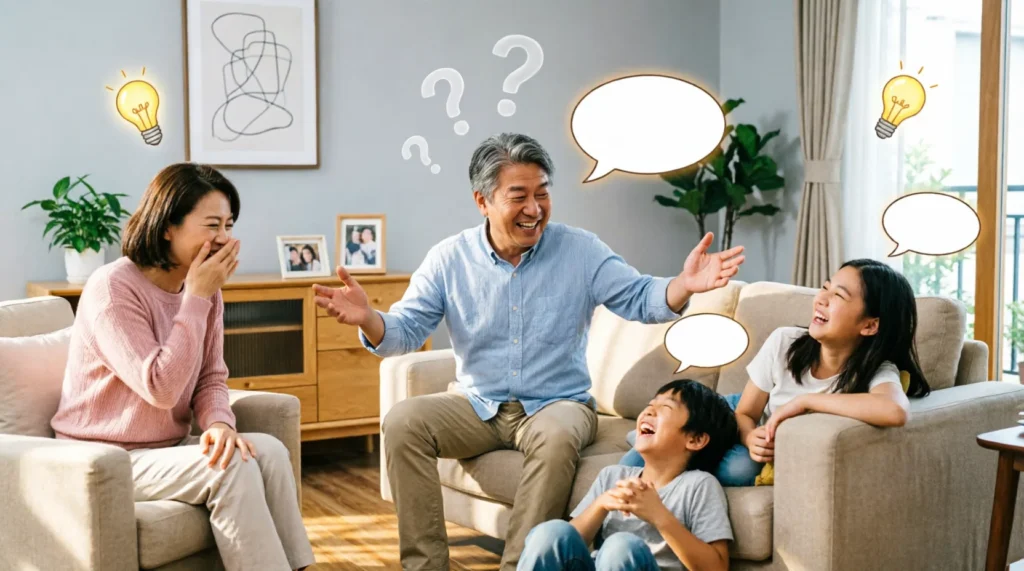
There is a specific kind of magic that happens when a dad tells a joke so bad it loops back around to being brilliant. These aren’t just puns; they are logic traps disguised as humor, designed to elicit a groan followed by a reluctant chuckle. Whether you are trying to break the ice at a family reunion or just want to annoy your siblings during a long car ride, this collection of funny dad jokes riddles with answers is your ultimate toolkit for playful mischief.
Top 5 Funny Dad Jokes Riddles
These five riddles represent the gold standard of paternal humor. They are short, punchy, and rely on wordplay that is simultaneously obvious and completely unexpected. I have tested these at countless birthday parties, and they consistently deliver the highest ratio of eye-rolls to laughs.
What has keys but can’t open locks? Answer: A piano
I speak without a mouth and hear without ears. I have no body, but I come alive with wind. What am I? Answer: An echo
What has one eye, but can’t see? Answer: A needle
What gets wet while drying? Answer: A towel
Why did the scarecrow win an award? Answer: Because he was outstanding in his field
Easy Riddles for Quick Laughs
These riddles are perfect for warming up a crowd. They require minimal lateral thinking and rely mostly on simple homophones or literal interpretations of common phrases. When I introduce these to younger kids, usually around age six or seven, they solve them almost instantly, which gives them a confidence boost before we move to the trickier stuff.
What has a head and a tail but no body? Answer: A coin
What goes up but never comes down? Answer: Your age
What has many teeth but cannot bite? Answer: A comb
What belongs to you, but other people use it more than you do? Answer: Your name
What has legs but doesn’t walk? Answer: A table
What has a neck but no head? Answer: A shirt
What has hands but can’t clap? Answer: A clock
What can you catch but not throw? Answer: A cold
Tricky Wordplay Riddles
This section is where the “dad” element really shines. These riddles rely on double meanings and linguistic traps. The key to delivering these effectively is to maintain a straight face. If you smile too early, the listener might suspect a pun is coming. the concept of a riddle often involves a question that requires ingenuity to answer, and these examples fit that definition by twisting everyday language into unexpected shapes.
What building has the most stories? Answer: The library
What kind of room has no doors or windows? Answer: A mushroom
What begins with T, ends with T, and has T in it? Answer: A teapot
What has a bottom at the top? Answer: Your legs
What word is spelled wrong in every dictionary? Answer: Wrong
What can run but never walks, has a mouth but never talks, has a head but never weeps, has a bed but never sleeps? Answer: A river
What has a thumb and four fingers but is not alive? Answer: A glove
What goes through cities and fields but never moves? Answer: A road
Animal-Themed Dad Jokes
Animals are a staple of family-friendly humor because they allow for absurd scenarios that don’t apply to humans. These riddles often personify creatures in ridiculous ways. I find that animal riddles work best when delivered with a slight accent or character voice, though that is entirely optional depending on your comfort level with public embarrassment.
What do you call a bear with no teeth? Answer: A gummy bear
What do you call a fish wearing a bowtie? Answer: Sofishticated
Why do cows wear bells? Answer: Because their horns don’t work
What do you call a sleeping bull? Answer: A bulldozer
What do you call a dog that does magic tricks? Answer: A labracadabrador
Why did the chicken join a band? Answer: Because it already knew how to drum
What do you call a pig that does karate? Answer: A pork chop
Why don’t elephants use computers? Answer: They’re afraid of the mouse
Food and Kitchen Riddles
Food riddles are particularly effective because everyone relates to eating. These jokes often play on the preparation methods or physical characteristics of ingredients. When I run these during dinner prep, they serve as a great distraction from the fact that I am burning the toast.
What kind of cheese isn’t yours? Answer: Nacho cheese
What fruit is always sad? Answer: A blueberry
Why did the cookie go to the doctor? Answer: Because he felt crummy
What do you call a fake noodle? Answer: An impasta
Why did the tomato turn red? Answer: Because it saw the salad dressing
What has to be broken before you can use it? Answer: An egg
What kind of cup holds water but has no bottom? Answer: A coconut
Why did the banana go to the doctor? Answer: It wasn’t peeling well
Math and Logic Dad Jokes
These riddles appeal to the part of the brain that enjoys patterns, even if the pattern is purely linguistic. They often involve numbers or shapes but rarely require actual calculation. The humor comes from the subversion of mathematical expectation. For instance, asking a math question and receiving a pun as an answer creates a cognitive dissonance that results in laughter.
Why was six afraid of seven? Answer: Because seven eight nine
What do you call a number that can’t keep still? Answer: A roamin’ numeral
Why did the two fours skip lunch? Answer: They already eight
What is a math teacher’s favorite dessert? Answer: Pi
Why was the equal sign so humble? Answer: Because he knew he wasn’t less than or greater than anyone else
What do you get when you cross a math book with a pencil? Answer: Lots of problems
Why did the student eat his homework? Answer: Because the teacher said it was a piece of cake
What shape does a heavy load make? Answer: A square (because it’s squared away)
Short and Snappy One-Liners
Sometimes you do not have time for a setup. These riddles are rapid-fire and ideal for text messages or quick interruptions. They are the verbal equivalent of a slapstick gag. The brevity is part of the charm, leaving little room for overthinking. As noted in discussions about humor, the element of funny often relies on surprise and brevity, making these short riddles highly effective for quick engagement.
What has ears but cannot hear? Answer: Corn
What has a face and two hands but no arms or legs? Answer: A clock
What has a ring but no finger? Answer: A telephone
What has words but never speaks? Answer: A book
What has a spine but no bones? Answer: A book
What has a bank but no money? Answer: A riverbank
What has a star but is not a sky? Answer: A sheriff’s badge
What has a heart that doesn’t beat? Answer: An artichoke
How to Use These Riddles
Knowing the riddles is only half the battle; delivery is everything. Here are a few proven strategies for deploying these jokes effectively.
- The Road Trip Distraction: Keep a list of ten riddles handy for when the kids start arguing in the back seat. The mental effort required to solve a riddle often overrides the impulse to fight. Start with the easy ones to engage them, then hit them with the tricky wordplay to keep them occupied for miles.
- The Dinner Table Icebreaker: Instead of asking “How was your day?”, ask a riddle. It shifts the dynamic from interrogation to game. Make it a rule that whoever solves the riddle gets to choose the dessert or pick the movie for the night. This raises the stakes and ensures everyone is listening.
- The Classroom Warm-Up: Teachers can use these as brain breaks. Write a riddle on the board at the start of class. Let students guess throughout the first ten minutes. It wakes up their brains and creates a positive, low-stakes environment before diving into heavier material.
- The Scavenger Hunt Clue: Replace standard directions with riddles. Instead of saying “Look under the sofa,” say “I have legs but cannot walk. Look beneath me.” This adds a layer of puzzle-solving to any party or holiday event.
Frequently Asked Questions
What is the best age group for these dad jokes? These riddles are surprisingly versatile. Children aged 6 to 12 enjoy the simplicity and the chance to outsmart adults. Teenagers often appreciate the irony and the “so bad it’s good” nature of the puns. Adults enjoy them as nostalgic callbacks or as light-hearted social lubricants. The key is matching the complexity to the audience; use the easy section for young kids and the tricky wordplay for older groups.
How do I deliver a dad joke riddle effectively? Timing and confidence are crucial. Deliver the setup clearly and pause briefly before the punchline. Do not laugh at your own joke prematurely. Maintain eye contact and a serious demeanor. The contrast between the serious delivery and the silly answer is what generates the humor. If you giggle while asking the question, you ruin the surprise.
Why are dad jokes so popular despite being considered “bad”? Dad jokes rely on shared cultural knowledge and simple linguistic structures. They are safe, inclusive, and non-offensive. Their popularity stems from their predictability and the communal experience of groaning together. They create a sense of belonging and shared humor that is low-risk and high-reward in social settings.
Can I use these riddles for educational purposes? Absolutely. Riddles enhance vocabulary, critical thinking, and lateral reasoning skills. They teach children to look beyond literal meanings and consider multiple interpretations of words. Using them in a classroom or homeschool setting can make language arts lessons more engaging and memorable.

With a background in psychology and cognitive science from Stanford University, Sarah Jones brings a unique perspective to the world of riddles and brain teasers. With a decade of experience in the field, she specializes in understanding how puzzles can enhance cognitive development and mental agility. Sarah’s interest in riddles began during her undergraduate years when she researched problem-solving processes in the human brain. Her work at RiddleMeHub focuses on creating puzzles that are both challenging and beneficial for mental growth, often incorporating elements of math and logic. She writes extensively about the cognitive benefits of engaging with brain teasers, aiming to promote brain health and fitness through fun and challenging content. Sarah’s contributions to the site include themed puzzle collections and in-depth analyses of classic riddles, making them accessible to both beginners and seasoned puzzlers alike. Her insightful approach has helped numerous readers appreciate the mental workout that comes with solving complex problems.