

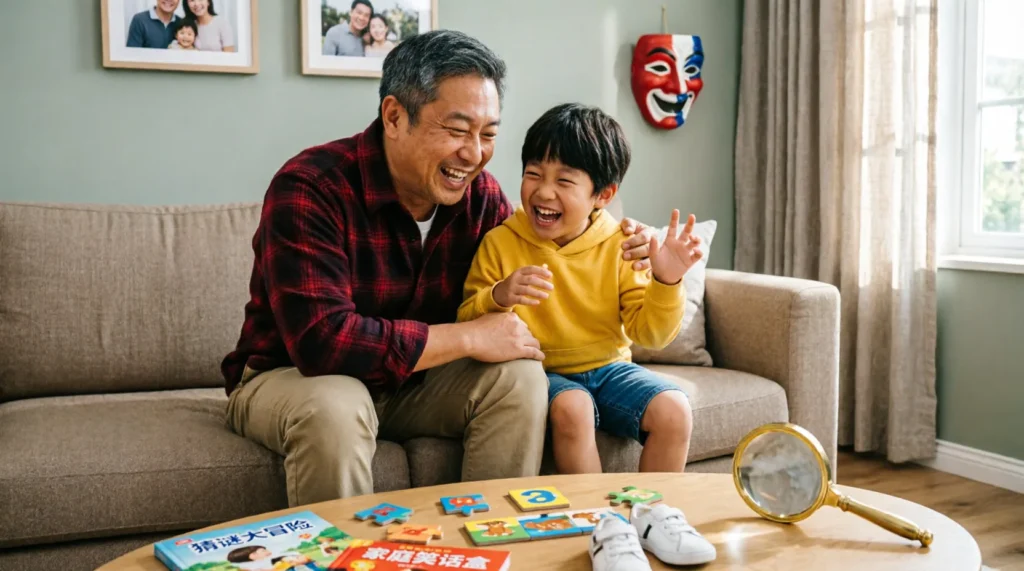
Nothing says “Happy Father’s Day” quite like watching Dad squint, scratch his chin, and finally groan when he realizes he’s been outsmarted by a six-year-old. Whether you are planning a backyard barbecue, a quiet brunch, or a chaotic morning of gift-opening, a well-timed riddle can break the ice and create memories that last longer than any tie or tool set. This collection is curated specifically for the dad demographic—men who appreciate wordplay, puns, and the occasional brain teaser that requires more logic than luck. I have tested these extensively at family gatherings to ensure they hit the sweet spot between challenging and solvable.
Top 5 Father’s Day Riddles
These are the heavy hitters. If you only have time for a few, start here. These riddles have the highest success rate for generating laughter and genuine “aha!” moments across different age groups.
I am taken from a mine, and shut up in a wooden case, from which I am never released, and yet I am used by almost every person. What am I?
Answer: Pencil lead (graphite)
What has keys but can’t open locks, has space but no room, and you can enter, but not go inside?
Answer: A keyboard
I speak without a mouth and hear without ears. I have no body, but I come alive with wind. What am I?
Answer: An echo
The more of this there is, the less you see. What is it?
Answer: Darkness
I have cities, but no houses. I have mountains, but no trees. I have water, but no fish. What am I?
Answer: A map
Easy Riddles for Young Kids
If you have grandchildren or younger children participating in the celebration, you need riddles that build confidence rather than frustration. These are designed to be solved quickly, giving kids the thrill of beating Dad at his own game. When I run these with my nieces and nephews, the key is to read them slowly and emphasize the rhyming words if applicable.
What has to be broken before you can use it?
Answer: An egg
I’m tall when I’m young, and I’m short when I’m old. What am I?
Answer: A candle
What month of the year has 28 days?
Answer: All of them
What is full of holes but still holds water?
Answer: A sponge
What question can you never answer yes to?
Answer: Are you asleep yet?
What goes up but never comes down?
Answer: Your age
What has one eye, but can’t see?
Answer: A needle
Where does today come before yesterday?
Answer: In the dictionary
What has many needles, but doesn’t sew?
Answer: A pine tree
What kind of band never plays music?
Answer: A rubber band
Funny Puns and Wordplay
Dads are statistically the primary consumers of dad jokes, so leaning into puns is a safe bet for Father’s Day. These aren’t traditional logic puzzles but rather play-on-words that require a specific type of lateral thinking. The humor here is intentional and cheesy. I recommend delivering these with a straight face to maximize the comedic effect.
Why did the scarecrow win an award?
Answer: Because he was outstanding in his field
What do you call a fake noodle?
Answer: An impasta
Why did the bicycle fall over?
Answer: Because it was two-tired
What do you call a bear with no teeth?
Answer: A gummy bear
Why couldn’t the leopard play hide and seek?
Answer: Because he was always spotted
What do you call a fish wearing a bowtie?
Answer: Sofishticated
Why did the golfer bring two pairs of pants?
Answer: In case he got a hole in one
What do you call a dinosaur that crashes his car?
Answer: Tyrannosaurus Wrecks
Why don’t eggs tell jokes?
Answer: They’d crack each other up
What do you call a sleeping bull?
Answer: A bulldozer
Tricky Riddles That Require Logic
These are for the dads who claim they “used to be good at puzzles.” These riddles rely on misdirection. The obvious answer is usually wrong. I have found that adults often overthink these, while teenagers sometimes solve them faster because they are less likely to assume complex hidden meanings. According to Riddle, the essence of a riddle is often a metaphorical description that requires the solver to look beyond the literal meaning of the words.
A man pushes his car to a hotel and tells the owner he’s bankrupt. Why?
Answer: He is playing Monopoly
You see a boat filled with people. It has not sunk, but when you look again you don’t see a single person on the boat. Why?
Answer: All the people were married
What has words, but never speaks?
Answer: A book
I have branches, but no fruit, trunk or leaves. What am I?
Answer: A bank
What can you catch, but not throw?
Answer: A cold
The person who makes it has no need of it; the person who buys it has no use for it. The person who uses it can neither see nor feel it. What is it?
Answer: A coffin
What has a head and a tail but no body?
Answer: A coin
What gets wet while drying?
Answer: A towel
I am not alive, but I grow; I don’t have lungs, but I need air; I don’t have a mouth, but water kills me. What am I?
Answer: Fire
Short and Snappy Brain Teasers
Sometimes you don’t have time for a long setup. These are rapid-fire riddles perfect for keeping the conversation moving during dinner or while waiting for the grill to heat up. The brevity is the challenge here; there is less context to clue the solver in.
What belongs to you, but other people use it more than you?
Answer: Your name
What goes through towns and over hills but never moves?
Answer: A road
What has a neck but no head?
Answer: A shirt
What runs all around a backyard, yet never moves?
Answer: A fence
What has hands but cannot clap?
Answer: A clock
What has legs but doesn’t walk?
Answer: A table
What has a thumb and four fingers, but is not a hand?
Answer: A glove
What can travel all around the world without leaving its corner?
Answer: A stamp
Riddles With a Twist
These riddles are designed to subvert expectations. They often sound like they are describing a physical object, but the answer is abstract or situational. These are my personal favorites because they force the solver to abandon their initial assumption entirely. In my experience, these are the ones that get passed around the table as people try to stump their relatives.
A father and a son are in a car accident. The father dies instantly, and the son is rushed to the hospital. The surgeon looks at the boy and says, “I cannot operate on him, he is my son.” How is this possible?
Answer: The surgeon is his mother
Before Mt. Everest was discovered, what was the highest mountain in the world?
Answer: Mt. Everest (it was still the highest, just not discovered)
How many months have 28 days?
Answer: All 12 of them
A cowboy rides into town on Friday, stays for three days, and leaves on Friday. How did he do it?
Answer: His horse’s name is Friday
What can you hold in your right hand, but never in your left?
Answer: Your left hand
If you drop me I’m sure to crack, but give me a smile and I’ll always smile back. What am I?
Answer: A mirror
What has a bottom at the top?
Answer: Your legs
What is so fragile that saying its name breaks it?
Answer: Silence
How to Use These Riddles
Integrating these riddles into your Father’s Day celebration can elevate the event from a standard meal to an interactive experience. Here are a few proven methods to deploy them effectively.
- Place Cards: Write a riddle on each place card at the dinner table. Guests must solve the riddle before they are allowed to eat their first bite. This guarantees conversation starters and prevents awkward silences.
- Scavenger Hunt Clues: If you are hiding gifts, use the riddles as clues leading from one location to the next. For example, hide the first clue in the mailbox with a riddle about letters or stamps.
- Toast Icebreaker: Before giving a toast, challenge Dad to solve a tricky riddle. If he gets it right, he gets to choose the music for the rest of the evening. If he gets it wrong, he has to tell a story from his childhood.
- Road Trip Entertainment: If you are traveling to see family, keep a list of these riddles handy. They are excellent for keeping kids engaged in the back seat without screens.
Frequently Asked Questions
What is the best age range for these riddles? This collection is mixed intentionally. The “Easy” section works well for ages 5-9, while the “Tricky” and “Twist” sections are better suited for teens and adults. The puns are universally appreciated by anyone who enjoys dad humor, regardless of age.
Why are riddles good for Father’s Day? Riddles encourage interaction and mental engagement. Unlike passive gifts, a riddle creates a shared moment of problem-solving. According to Father, the role of a father often involves teaching and guiding, and riddles provide a playful, low-stakes environment for this dynamic to flourish through intellectual play.
How do I make a riddle harder? To increase difficulty, remove rhyming structures and use more abstract metaphors. Avoid direct references to the object’s function. Instead, describe its relationship to other objects or its state of being. For example, instead of saying “I keep food cold,” say “I have a light but no sun, and a shelf but no books.”
Can I use these for other holidays? Absolutely. While some are themed around general concepts, many are universal. The puns and logic puzzles work for birthdays, Christmas, or casual family gatherings. You can also tweak the wording to fit specific themes, such as changing “dad” references to “mom” for Mother’s Day.

William Williams holds a master’s degree in Linguistics from Oxford University and has dedicated over 15 years to exploring the intricate world of riddles and brain teasers. Known for his deep understanding of wordplay and semantics, William specializes in crafting language-based challenges that test the limits of logical thinking. His passion for puzzles was sparked by a childhood love of crosswords and cryptic clues, leading him to a career filled with curiosity and creativity. At RiddleMeHub, William focuses on creating content that not only entertains but also educates, offering readers insights into the history and methodologies behind classic riddles. His articles often dive into the etymology of words used in brain teasers and how they enhance cognitive skills. With a knack for storytelling, he weaves narratives into his riddles, engaging audiences of all ages. As a senior contributor, William continually pushes the boundaries of traditional riddles while maintaining a respect for their time-honored roots.