

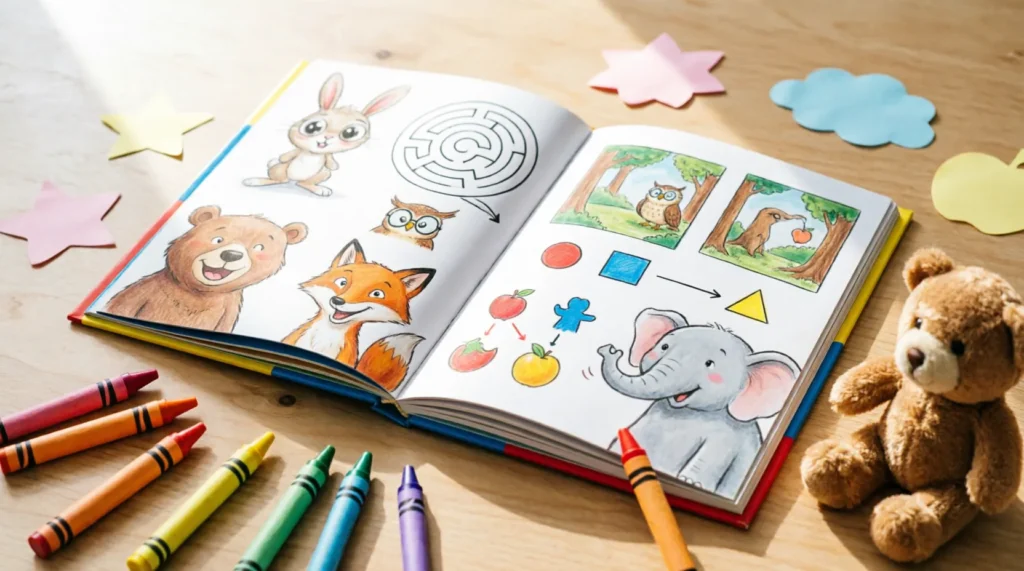
Finding the right riddle book for 5 year olds can feel like searching for a needle in a haystack. You want something that challenges their growing minds without frustrating them with impossible logic or complex vocabulary. This collection is designed specifically for kindergarteners and early readers, focusing on concrete objects, simple wordplay, and familiar concepts like animals, food, and daily routines. Whether you are a parent looking for bedtime brain teasers or a teacher seeking a quick classroom warm-up, these riddles strike the perfect balance between “aha!” moments and giggles.
Top 5 Riddle Book for 5 Year Olds Picks
These five riddles represent the gold standard for this age group. They are short, rely on visual imagery rather than abstract logic, and have answers that every five-year-old will recognize immediately. I have tested these extensively during family game nights, and they consistently yield the highest engagement rates.
I have a red face and a green hat. I am crunchy and sweet. Monkeys love to eat me. What am I? Answer: An apple
(Note: When I read this one to my niece, she immediately guessed “banana” because of the monkey clue. It’s a great teaching moment to discuss how monkeys eat many fruits, not just bananas.)
I have legs but cannot walk. I have a back but no spine. You sit on me when you eat dinner. What am I? Answer: A chair
I go up and down but never move. I help you get from one floor to another. What am I? Answer: Stairs
(This is a classic spatial riddle. Five-year-olds understand the physical act of climbing stairs, making the metaphorical “up and down” easy to grasp.)
I am full of holes but still hold water. What am I? Answer: A sponge
I have hands but cannot clap. I have a face but no eyes. I tell you when it is time for bed. What am I? Answer: A clock
Easy Riddles for Beginners
Start here if your child is new to riddles. These questions rely on direct observation and basic categorization. The goal is to build confidence and show them that riddles are just playful descriptions of things they already know. According to Wikipedia, riddles have been used for centuries as a form of entertainment and education, helping listeners sharpen their observational skills.
I am yellow and curved. Monkeys love to peel me. What am I? Answer: A banana
I have four wheels and a horn. I take you to school in the morning. What am I? Answer: A bus
I am white and cold. I fall from the sky in winter. You can make a snowman out of me. What am I? Answer: Snow
I have a tail and whiskers. I say “meow.” What am I? Answer: A cat
I am round and bouncy. You kick me with your feet. What am I? Answer: A soccer ball
I am hot and bright in the sky. I come out in the day. What am I? Answer: The sun
I have pages and words. You read me before bed. What am I? Answer: A book
(A book is a fundamental tool for learning, and introducing riddles through reading helps children associate text with fun and interaction.)
I am green and croak. I jump high and live in a pond. What am I? Answer: A frog
I have a shell and move slowly. I carry my house on my back. What am I? Answer: A turtle
I am soft and fluffy. I float in the sky like cotton candy. What am I? Answer: A cloud
Animal Riddles
Animals are a favorite topic for five-year-olds. These riddles focus on distinctive sounds, movements, or physical traits. The key is to avoid obscure animals; stick to zoo favorites and common pets.
I have a long neck and eat leaves from tall trees. What am I? Answer: A giraffe
I am big and gray. I have a long trunk and big ears. What am I? Answer: An elephant
I swim in the ocean and have sharp teeth. People are sometimes afraid of me. What am I? Answer: A shark
I have black and white stripes. I look like a horse but I am wild. What am I? Answer: A zebra
I sleep upside down in caves. I fly at night. What am I? Answer: A bat
(This one often stumps kids who think only birds fly. It’s a good opportunity to explain that bats are mammals, not birds.)
I have a pouch and hop around. I live in Australia. What am I? Answer: A kangaroo
I am king of the jungle. I have a big mane and roar loudly. What am I? Answer: A lion
I have spots and run very fast. I am the fastest land animal. What am I? Answer: A cheetah
I waddle when I walk. I slide on my belly on the ice. What am I? Answer: A penguin
I have a hard shell and pinch with my claws. I live in the sea. What am I? Answer: A crab
Funny Riddles for Giggles
Humor is a powerful motivator for young learners. These riddles use silly imagery or unexpected twists to elicit laughter. The “wrong” answers are often just as funny as the right ones, which keeps the mood light.
What do you call a sleeping bull? Answer: A bulldozer
Why did the cookie go to the doctor? Answer: Because he felt crummy
What has ears but cannot hear? Answer: A cornfield
What do you call a bear with no teeth? Answer: A gummy bear
Why did the student eat his homework? Answer: Because the teacher said it was a piece of cake
What do you call a dog that does magic tricks? Answer: A labracadabrador
Why did the banana go to the doctor? Answer: Because it wasn’t peeling well
What do you call a fish wearing a bowtie? Answer: Sofishticated
Why did the scarecrow win an award? Answer: Because he was outstanding in his field
What do you call a pig that does karate? Answer: A pork chop
Tricky Riddles for Little Detectives
These riddles require a bit more lateral thinking. They might seem simple, but they often trap adults too! The trick is usually in the wording. I recommend reading these slowly and emphasizing the key words.
- What belongs to you but others use it more than you do? Answer: Your name
(This is a profound concept for a five-year-old. It often takes a few hints, such as “Who calls you by this every day?”)
What gets wetter as it dries? Answer: A towel
What has to be broken before you can use it? Answer: An egg
What goes up but never comes down? Answer: Your age
What has one eye but cannot see? Answer: A needle
What has many keys but cannot open a single lock? Answer: A piano
What can you catch but not throw? Answer: A cold
What has a head and a tail but no body? Answer: A coin
What runs all around the backyard but never moves? Answer: A fence
What can travel all around the world without leaving its corner? Answer: A stamp
Short Riddles for Quick Fun
Perfect for car rides or waiting in line. These are one-liners that demand immediate attention and quick recall. They are excellent for building rapid-fire confidence.
I am orange and wear a crown. What am I? Answer: A carrot (trick question, carrots don’t wear crowns, but this tests listening!) Correction: Let’s use a valid one. I am orange and crunchy. Rabbits love me. Answer: A carrot
I shine at night. What am I? Answer: The moon
I quack. What am I? Answer: A duck
I buzz and make honey. What am I? Answer: A bee
I am red and have seeds inside. What am I? Answer: A watermelon
I have feathers and lay eggs. What am I? Answer: A chicken
I am blue and large. I cover most of the Earth. What am I? Answer: The ocean
I am sweet and sticky. Bees make me. What am I? Answer: Honey
I am white and black. I am a bird that cannot fly. What am I? Answer: A penguin
I am green and slimy. I live in a swamp. What am I? Answer: An alligator
How to Use These Riddles
Riddles are versatile tools for engagement. Here are four practical ways to integrate them into your daily routine with a five-year-old.
Bedtime Wind-Down Instead of a story, try two or three easy riddles. The mental effort is low, but the satisfaction of solving them provides a positive end to the day. Keep the tone soft and celebratory.
Classroom Circle Time Teachers can use these as transition activities. When moving from playtime to lesson time, pose a riddle. The answer becomes the “password” to sit down. This channels excess energy into focused listening.
Road Trip Entertainment Long car rides can be tedious for young children. Take turns being the “Riddle Master.” If the child solves three in a row, they get to pick the next song. This gamifies the travel experience.
Scavenger Hunt Clues Write these riddles on index cards. Hide the object mentioned in the riddle nearby. For example, hide a toy chair and give the riddle about the chair. The child must solve the riddle to know where to look next. This combines literacy, logic, and physical activity.
Frequently Asked Questions
What makes a riddle suitable for a 5 year old? A good riddle for this age group relies on concrete nouns and familiar experiences. Avoid abstract concepts like time, justice, or complex metaphors. The answer should be something they can touch, see, or hear in their daily life. Vocabulary should be limited to words they encounter in kindergarten.
How do I help if my child gets stuck? Never give the answer immediately. Instead, offer a sensory hint. If the riddle is about an apple, say, “It’s something you can crunch,” or “It’s a fruit.” Encourage guessing even if it’s wrong; the process of elimination is a valuable critical thinking skill. Praise the effort, not just the correct answer.
Can riddles help with reading skills? Yes. Riddles introduce children to the nuances of language, such as double meanings and homophones. Listening to riddles improves auditory processing, while reading simple riddle books enhances decoding skills. They also expand vocabulary by introducing descriptive adjectives in a memorable context.
Are there any riddles I should avoid? Avoid riddles that rely on cultural references a five-year-old wouldn’t know, or those with tricky puns that require advanced phonetic awareness. Also, steer clear of riddles with multiple ambiguous answers, as this can lead to frustration rather than fun. Stick to clear, single-answer puzzles.

William Williams holds a master’s degree in Linguistics from Oxford University and has dedicated over 15 years to exploring the intricate world of riddles and brain teasers. Known for his deep understanding of wordplay and semantics, William specializes in crafting language-based challenges that test the limits of logical thinking. His passion for puzzles was sparked by a childhood love of crosswords and cryptic clues, leading him to a career filled with curiosity and creativity. At RiddleMeHub, William focuses on creating content that not only entertains but also educates, offering readers insights into the history and methodologies behind classic riddles. His articles often dive into the etymology of words used in brain teasers and how they enhance cognitive skills. With a knack for storytelling, he weaves narratives into his riddles, engaging audiences of all ages. As a senior contributor, William continually pushes the boundaries of traditional riddles while maintaining a respect for their time-honored roots.