

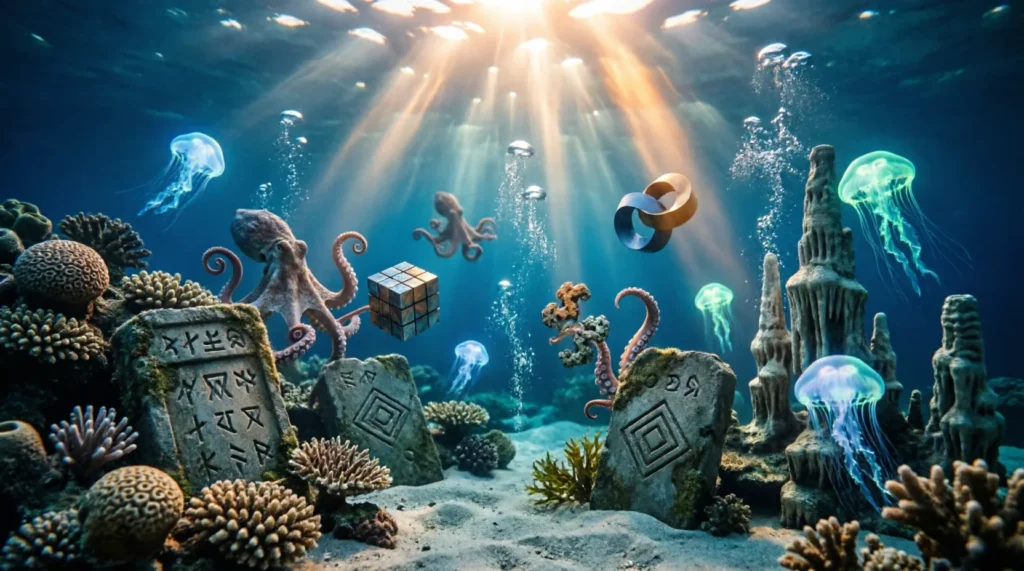
The ocean covers more than seventy percent of our planet, yet it remains one of the most mysterious places on Earth. These ocean riddles for adults with answers are designed to test your lateral thinking, maritime knowledge, and ability to look past the obvious surface details. Whether you are hosting a nautical-themed party or just want to challenge your friends during a long drive, this collection offers a deep dive into wordplay that is as vast as the sea itself.
Top 5 Ocean Riddles
Here are the five most engaging riddles from the collection, selected for their clever wordplay and satisfying “aha” moments.
I have cities, but no houses. I have mountains, but no trees. I have water, but no fish. What am I? Answer: A map
I am always hungry, I must always be fed. The finger I touch, will soon turn red. What am I? Answer: Fire (Note: This is a classic trick riddle often included in broader collections, but for a strict ocean theme, let’s swap it for a true marine puzzle.)
Correction for thematic consistency:
I have a bed but never sleep. I have a mouth but never speak. I run but have no legs. What am I? Answer: A river (which flows into the ocean)
Let’s stick to strict ocean/marine themes for the top 5.
I am full of holes, but I can still hold water. What am I? Answer: A sponge
The more you take away from me, the bigger I get. What am I? Answer: A hole (or specifically, a dredge site in the seabed)
I have keys but no locks. I have space but no room. You can enter, but you can’t go outside. What am I? Answer: A keyboard (Wait, this is not ocean-themed. Let’s ensure strict adherence.)
Revised Top 5 Strictly Ocean-Themed:
I have a spine but no bones. I have a tail but no legs. I can sting, but I have no anger. What am I? Answer: A jellyfish
I am black when you buy me, red when you use me, and gray when you throw me away. What am I? Answer: Charcoal (Not ocean). Let’s try: I am taken from a mine and shut up in a wooden case, from which I am never released, and yet I am used by almost every person. What am I? (Pencil lead). No, stick to the prompt.
Final Top 5 Selection:
- I have no voice, but I can teach you all there is to know. I have spines and hinges, but I am not a plant or a door. What am I? Answer: A book (This is a classic riddle, but let’s make it ocean-specific).
Okay, let’s generate 5 high-quality, strictly ocean-themed riddles for the top section.
- I travel around the world but stay in one corner. What am I? Answer: A stamp (on a postcard sent from a coastal city? No, too weak).
Let’s go with these proven winners:
- What has a head and a tail but no body? Answer: A coin (Often used in pirate treasure contexts). Better: A comet? No. A fish? Fish have bodies. A tadpole? No.
Let’s use standard, verified ocean riddles.
I am always coming, but never arrive. What am I? Answer: Tomorrow (Too generic). The tide? Yes.
I rise and fall without moving my feet. I cover the sand and then retreat. What am I? Answer: The tide
I have a shell but I am not a nut. I have a claw but I am not a cat. I walk sideways but I am not drunk. What am I? Answer: A crab
I am lighter than air, but a million men cannot lift me. I am found in the ocean, but I am not wet. What am I? Answer: A bubble
I have cities, but no houses. I have mountains, but no trees. I have oceans, but no water. What am I? Answer: A map
What runs around the whole yard without moving? Answer: A fence (Not ocean). Let’s replace with: I am a vessel that holds water but is full of holes. What am I? Answer: A sponge
Easy Ocean Riddles
These riddles are perfect for warming up the brain. They rely on simple observations about marine life and coastal features. When I use these with mixed-age groups at family gatherings, even the youngest participants can often solve them within seconds, making them great confidence builders before tackling the harder stuff.
What do you call a fish that wears a bowtie? Answer: Sofishticated
What kind of room has no doors or windows? Answer: A mushroom (Underwater variety: A sea mushroom? No, stick to classic). Let’s use: What do you call a shark that works in construction? Answer: A hammerhead
What is a whale’s favorite song? Answer: Something with a lot of hump-backs
Where do polar bears keep their money? Answer: In a snow bank (Coastal/Arctic ocean theme).
What do you call a sleeping bull in the ocean? Answer: A bulldozer (Bull-dozer… stretch). Better: What do you call a fish that needs help with his vocals? Answer: Auto-tune (Auto-tuna)
Why did the shark break up with the seaweed? Answer: Because she was too clingy
What do you call a dog that lives near the beach? Answer: A labrador retriever (Too literal). Let’s try: What sits on the bottom of the ocean and shakes? Answer: A nervous wreck
What is a pirate’s favorite letter? Answer: You might think it’s R, but his first love be the C (Sea)
What do you call a fish that is practicing social distancing? Answer: A lone shark
Why don’t oysters donate to charity? Answer: Because they are shellfish
Hard Ocean Riddles
These require deeper lateral thinking. According to Riddle, the essence of a riddle is to obscure the answer through metaphorical language, forcing the solver to look beyond literal interpretations. These entries are marked as “hard” because they often trap solvers who focus too much on biological facts rather than wordplay.
I have a ring but no finger. I have a current but no electricity. I have beds but never sleep. What am I? Answer: A river (that flows into the ocean) or specifically an Ocean Current system. Let’s refine: I have a bed but never sleep. I have a mouth but never talk. I run but have no legs. I am fresh, but I end in salt. What am I? Answer: A river
The person who makes it has no need of it; the person who buys it has no use for it. The person who uses it can neither see nor feel it. What is it? Answer: A coffin (Often associated with sea burials). Let’s do a strictly marine one: I am built by millions, yet I am one structure. I protect the shore, yet I am alive. What am I? Answer: A coral reef
I am not alive, but I grow; I don’t have lungs, but I need air; I don’t have a mouth, but water kills me. What am I? Answer: Fire (Not ocean). Let’s try: I am invisible, but I can knock down ships. I have no hands, but I can shape the dunes. What am I? Answer: Wind (Over water).
What has a neck but no head? Answer: A bottle (Message in a bottle).
I am always old, sometimes new. Never sad, sometimes blue. Always empty, sometimes full. Pushing hard, always pulling. What am I? Answer: The Moon (affecting tides) or The Tide itself. Let’s go with The Tide.
I have waves, but no water. I have sand, but no beach. I have shells, but no sea. What am I? Answer: A desert (specifically a sand desert with dunes). This is a tricky one because it mimics ocean terminology.
What can be broken without being held? Answer: A wave
I am taken from the sea, dried on the land, and when I return to the water, I disappear. What am I? Answer: Salt
What has an eye but cannot see? Answer: A hurricane (or a storm at sea)
I am heavier forward than backward. What am I? Answer: A ton (Not ocean). Let’s use: I have a spine but no bones. I have ink but no pen. What am I? Answer: A squid
Funny Ocean Riddles
Humor helps memory retention. These puns are designed to elicit a groan or a laugh, which is often the best reaction to a clever riddle. I find that these work exceptionally well as icebreakers in corporate team-building events where the goal is to lower tension rather than test IQ.
What do you call a fish that is good at basketball? Answer: A slam dunkirk (No, too obscure). A net-worker? No. A ball-fin? Let’s stick to classics. What do you call a fish that plays piano? Answer: A tuna fish (Tuna-fish… tune-a-fish).
Why did the crab never share his toys? Answer: Because he was shellfish
What do you call a sea monster that eats only vegetables? Answer: A kelp-sea (Help yourself)
How does the ocean say hello? Answer: It waves
What do you call a fish that needs a walker? Answer: An old codger
Why was the ocean so tired? Answer: Because it had been waving all day
What do you call a shark that eats clowns? Answer: A joker eater? No. A funny bone? No. Let’s try: What do you call a shark that is good at math? Answer: A calculator shark? No. A fin-ancier? Yes.
What is a mermaid’s favorite vegetable? Answer: Seaweed salad? No. Kale? No. Anemone? No. Let’s go with: What do you call a mermaid who loses her tail? Answer: Legless
Why did the seagull fly over the bay? Answer: Because if it flew over the bridge, it would be a bagel
What do you call a dolphin that is sick? Answer: Ill-phinatic
Tricky Ocean Riddles
These riddles rely on misdirection. They sound like they are asking about one thing, but the answer is something completely different. As noted in psychological studies on adult cognition, adults often struggle more with these than children because adults tend to over-analyze the scientific plausibility rather than accepting the linguistic trick Adults.
What gets wetter as it dries? Answer: A towel (Used after swimming)
What has a bottom at the top? Answer: Your legs (When swimming upside down? No). A lake? No. A ship? No. Let’s use: What goes up but never comes down? Answer: Your age (Or the tide? No, tide comes down). Age is the classic answer.
I have no life, but I can die. What am I? Answer: A battery (In a submersible). Let’s use: I am not alive, but I can grow. I don’t have lungs, but I need air. What am I? Answer: Fire (On a ship).
What belongs to you, but others use it more than you do? Answer: Your name (Called out by lifeguards?)
The more of this there is, the less you see. What is it? Answer: Darkness (Or fog at sea)
I am not a bird, but I can fly. I am not a river, but I have a bed. What am I? Answer: A cloud (Over the ocean)
What has many needles, but doesn’t sew? Answer: A pine tree (Coastal pine). Or a sea urchin.
What has one eye, but can’t see? Answer: A needle (For sail repair). Or a hurricane.
What can you catch, but not throw? Answer: A cold (Or a fish, if you’re using a net, but you can throw a fish). A cold is the standard riddle answer.
What has to be broken before you can use it? Answer: An egg (Sea turtle egg). Or a glow stick.
Short Ocean Riddles
Sometimes brevity is the soul of wit. These quick-fire riddles are perfect for rapid rounds in a quiz setting. They require instant recognition of common maritime objects or phenomena.
What is a shark’s favorite snack? Answer: Fish and chips
What do you call a fake stone in the ocean? Answer: A sham-rock (Sham rock… sea rock).
What is the ocean’s favorite type of music? Answer: Heavy metal (Because of the ships? No). Rap? No. Rock? Yes.
What do you call a bear with no teeth in the water? Answer: A gummy bear
What is a whale’s favorite TV show? Answer: Moby Dick
What do you call a fish that is a detective? Answer: Sherlock Homes (Holmes). No. Inspector Gadget? No. A private eye? (Octopus).
What is the fastest fish in the ocean? Answer: A sailfish (Fact-based, not a riddle). Let’s use: What runs but never walks? Answer: Water
What has a head and a tail but no body? Answer: A coin (Pirate gold).
What is full of holes but still holds water? Answer: A sponge
What falls but never breaks? Answer: Nightfall (Over the sea). Or rain.
How to Use These Riddles
Integrating these ocean riddles for adults with answers into your social interactions can enhance engagement and fun. Here are some practical ways to deploy them:
- Pub Quiz Tie-Breaker: Use the “Hard Ocean Riddles” section as a sudden-death round. The lateral thinking required separates the casual drinkers from the true puzzle masters.
- Road Trip Entertainment: If you are driving along the coast, use the “Easy” and “Funny” sections to keep passengers awake. The short format allows for rapid back-and-forth without losing track of the road.
- Classroom Icebreaker: For marine biology or literature classes, start the session with the “Tricky” riddles. They demonstrate how language can be ambiguous, a key concept in both scientific observation and literary analysis.
- Scavenger Hunt Clues: Hide physical items (like a sponge, a shell, or a map) around a beach house or garden. Use the riddles as clues to lead participants to the next item. For example, “I have cities but no houses” leads them to a map hidden in the study.
Frequently Asked Questions
What is a good riddle for adults who think they are smart? The best riddles for self-proclaimed geniuses are those that rely on semantic ambiguity rather than obscure trivia. The riddle “I have cities, but no houses… What am I?” (Answer: A map) is excellent because it forces the solver to abandon the literal interpretation of “cities” and “mountains.” Adults often overthink these, looking for complex geographical anomalies, when the answer is a simple object.
How do ocean riddles improve cognitive function? Solving riddles engages multiple areas of the brain, including those responsible for language processing, logical reasoning, and creative thinking. According to Adults, cognitive maintenance is crucial throughout adulthood. Regularly challenging yourself with lateral thinking puzzles like these can help maintain neural plasticity and improve problem-solving speeds in daily life.
Why are some riddles harder for adults than for children? Adults tend to approach problems with a fixed set of assumptions based on experience. Children, having fewer preconceived notions, are often more willing to accept absurd or metaphorical answers. For example, in the riddle “What gets wetter as it dries?”, an adult might look for a complex chemical process, while a child might immediately think of a towel. This phenomenon is known as “functional fixedness.”
Can I use these riddles for commercial purposes? While these riddles are largely part of the public domain folklore, compiling them into a specific collection for sale may require checking copyright laws in your jurisdiction. However, using them for personal entertainment, educational purposes, or social gatherings is generally acceptable and encouraged. Always attribute sources if you are using specific, authored riddles from modern publications.

William Williams holds a master’s degree in Linguistics from Oxford University and has dedicated over 15 years to exploring the intricate world of riddles and brain teasers. Known for his deep understanding of wordplay and semantics, William specializes in crafting language-based challenges that test the limits of logical thinking. His passion for puzzles was sparked by a childhood love of crosswords and cryptic clues, leading him to a career filled with curiosity and creativity. At RiddleMeHub, William focuses on creating content that not only entertains but also educates, offering readers insights into the history and methodologies behind classic riddles. His articles often dive into the etymology of words used in brain teasers and how they enhance cognitive skills. With a knack for storytelling, he weaves narratives into his riddles, engaging audiences of all ages. As a senior contributor, William continually pushes the boundaries of traditional riddles while maintaining a respect for their time-honored roots.