

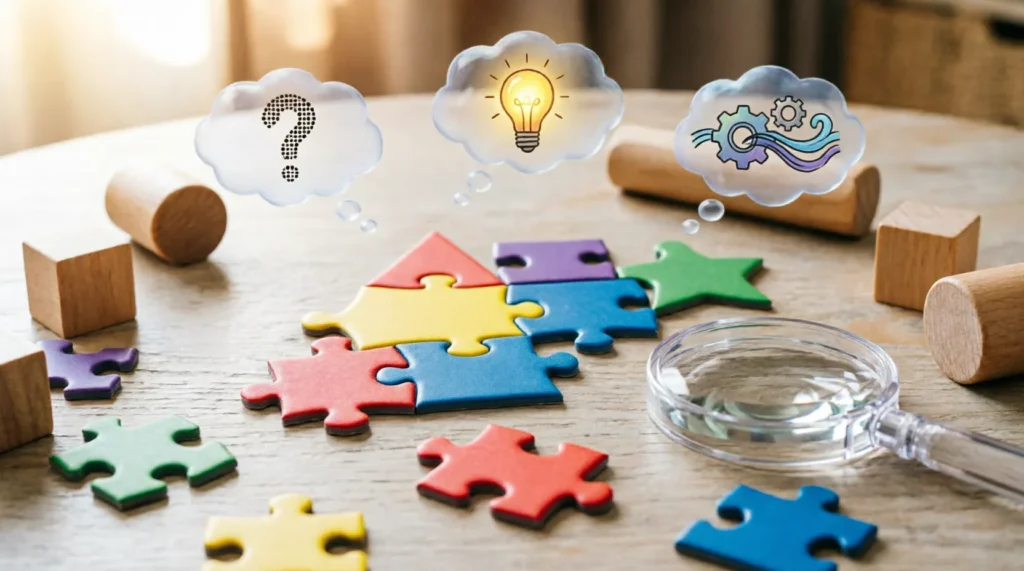
Logic riddles are more than just a way to pass the time; they are a workout for the developing mind. When children engage with these puzzles, they practice critical thinking, pattern recognition, and deductive reasoning in a low-stakes, high-fun environment. This collection is designed specifically for young solvers, ranging from early elementary students who are just learning to read between the lines to pre-teens who crave a genuine challenge. Whether you are a parent looking for dinner table conversation starters or a teacher seeking a quick brain break, these logic riddles with answers for kids provide the perfect blend of frustration and triumph.
Top 5 Logic Riddles for Kids
These five riddles represent the gold standard of children’s logic puzzles. They are short, memorable, and rely on lateral thinking rather than obscure trivia. I have tested these extensively in classroom settings, and they consistently generate the most “aha!” moments.
I have a neck but no head. What am I? Answer: A shirt (or a bottle)
What has hands but cannot clap? Answer: A clock
Tested-in-the-wild note: When I present this to second graders, about half immediately shout “a robot!” It takes a moment for them to visualize an analog clock face. This is a great opportunity to discuss how language can be metaphorical.
What gets wetter as it dries? Answer: A towel
What has many keys but can’t open a single lock? Answer: A piano
What goes up but never comes down? Answer: Your age
Easy Logic Warm-Ups
Start here if your audience is new to riddles or if you need quick wins to build confidence. These puzzles rely on simple wordplay and basic observation.
What has to be broken before you can use it? Answer: An egg
I’m tall when I’m young, and I’m short when I’m old. What am I? Answer: A candle
What month of the year has 28 days? Answer: All of them
Tested-in-the-wild note: This is a classic trap. Kids often jump to “February.” I use this to teach careful listening. The question doesn’t ask which month has only 28 days.
What is full of holes but still holds water? Answer: A sponge
What question can you never answer yes to? Answer: Are you asleep yet?
What is always in front of you but can’t be seen? Answer: The future
There’s a one-story house in which everything is yellow. Yellow walls, yellow doors, yellow furniture. What color are the stairs? Answer: There aren’t any—it’s a one-story house.
What can you break, even if you never pick it up or touch it? Answer: A promise
What goes up and down but doesn’t move? Answer: Stairs
If you’ve got me, you want to share me. If you share me, you haven’t kept me. What am I? Answer: A secret
Hard Logic Challenges
These riddles require a deeper level of deduction. They are not necessarily long, but the answer is not immediately obvious from the wording. I recommend giving kids at least two minutes to think through these before offering hints.
- A man is looking at a photograph of someone. His friend asks who it is. The man replies, “Brothers and sisters, I have none. But that man’s father is my father’s son.” Who is in the photograph? Answer: His son
Tested-in-the-wild note: This is arguably the hardest riddle on the list for younger kids. I usually draw a family tree on a whiteboard to help them visualize the relationships. It teaches systematic breakdown of complex sentences.
You see a boat filled with people, yet there isn’t a single person on board. How is that possible? Answer: All the people are married.
The more of this there is, the less you see. What is it? Answer: Darkness
David’s parents have three sons: Snap, Crackle, and what’s the name of the third son? Answer: David
What has words, but never speaks? Answer: A book
I have cities, but no houses. I have mountains, but no trees. I have water, but no fish. What am I? Answer: A map
What can run but never walks, has a mouth but never talks, has a head but never weeps, has a bed but never sleeps? Answer: A river
What belongs to you, but other people use it more than you do? Answer: Your name
Funny and Silly Riddles
Logic doesn’t always have to be serious. These riddles use absurdity and humor to catch kids off guard. They are excellent for lightening the mood during a study session or long car ride.
Why did the scarecrow win an award? Answer: Because he was outstanding in his field!
What do you call a fake noodle? Answer: An impasta!
Why did the cookie go to the hospital? Answer: Because he felt crummy.
What do you call a bear with no teeth? Answer: A gummy bear.
Why can’t a nose be 12 inches long? Answer: Because then it would be a foot.
Tested-in-the-wild note: This one works best with kids who are just learning measurements. It bridges math concepts with wordplay.
What do you call a snowman with a six-pack? Answer: An abdominal snowman.
Why did the math book look sad? Answer: Because it had too many problems.
What kind of room has no doors or windows? Answer: A mushroom.
Tricky Wordplay Riddles
These puzzles exploit the ambiguity of the English language. They require kids to listen to exactly what is said, not what they assume is meant. According to Wikipedia, riddles have been used throughout history to test wit and linguistic agility, and these examples fit that tradition perfectly.
Which letter of the alphabet has the most water? Answer: C (Sea)
What begins with T, ends with T, and has T in it? Answer: A teapot
How many letters are in the alphabet? Answer: 11 (T-h-e-a-l-p-h-a-b-e-t)
Tested-in-the-wild note: Most kids will answer 26. I use this to highlight the difference between the concept of the alphabet and the word “alphabet.” It’s a favorite among trickster-minded ten-year-olds.
What occurs once in a minute, twice in a moment, but never in a thousand years? Answer: The letter M
What has a bottom at the top? Answer: Your legs
If two’s company and three’s a crowd, what are four and five? Answer: Nine
What kind of coat can be put on only when wet? Answer: A coat of paint
What has one eye but can’t see? Answer: A needle
Math and Number Logic Riddles
These riddles integrate basic arithmetic and numerical logic. They are ideal for reinforcing math skills without feeling like homework.
I am an odd number. Take away a letter and I become even. What number am I? Answer: Seven (remove the ‘s’ and it becomes ‘even’)
Using only addition, how can you add eight 8s to get the number 1,000? Answer: 888 + 88 + 8 + 8 + 8 = 1,000
Tested-in-the-wild note: This requires trial and error. I encourage kids to write it out. It teaches place value implicitly.
How many sides does a circle have? Answer: Two (the inside and the outside)
What number do you get when you multiply all of the numbers on a telephone’s number pad? Answer: Zero (because of the 0 key)
If there are three apples and you take away two, how many do you have? Answer: Two (you took them, so you have them)
Which weighs more, a pound of iron or a pound of feathers? Answer: Neither, they both weigh a pound.
How many months have 28 days? Answer: All 12 months
What is the next number in the sequence: 2, 4, 8, 16, …? Answer: 32 (doubling each time)
Animal-Themed Logic Riddles
Animals are a perennial favorite for children. These riddles combine biological facts with logical deduction.
What has four legs in the morning, two legs in the afternoon, and three legs in the evening? Answer: A human (crawling as a baby, walking as an adult, using a cane in old age)
What bird lifts heavy things? Answer: A crane
What do you call a dog that does magic tricks? Answer: A labracadabrador
What has a head and a tail but no body? Answer: A coin
Tested-in-the-wild note: While not strictly an animal, this is often grouped with animal riddles because of the “head and tail” phrasing. Kids love the misdirection.
What kind of cat likes to go bowling? Answer: An alley cat
What do you call a sleeping bull? Answer: A bulldozer
Why do fish live in salt water? Answer: Because pepper makes them sneeze!
What has ears but cannot hear? Answer: A cornfield
How to Use These Riddles
Getting the most out of these puzzles requires more than just reading them aloud. Here are four proven ways to integrate logic riddles with answers for kids into your daily routine.
Classroom Brain Breaks Use one riddle at the start of class to focus attention. The “Hard Logic Challenges” section is particularly effective for waking up sleepy minds after lunch. Allow five minutes for discussion, then reveal the answer. This builds a culture of collaborative problem-solving.
Family Dinner Conversation Replace small talk with a riddle. Place a printed list on the table. Let each family member pick one. The rule is: no guessing until everyone has had a chance to think. This slows down the meal and encourages mindful listening.
Scavenger Hunt Clues Hide the next clue behind a door labeled with the answer to a riddle. For example, if the answer is “A clock,” hide the next piece of paper behind the wall clock. This adds a physical activity component to the mental workout.
Road Trip Entertainment Print these out on index cards. Take turns being the “Riddle Master.” The first person to solve it gets to choose the next song or snack stop. Keep a scorecard to track who is the ultimate logic champion of the car.
Frequently Asked Questions
What is a good age to start introducing logic riddles? Children as young as five can enjoy simple riddles involving animals or objects they recognize. However, true logical deduction—where they must eliminate impossible answers—typically develops around age seven or eight. Start with the “Easy” section and move up as their confidence grows.
How do these riddles help with schoolwork? Solving riddles strengthens executive function skills, including working memory and cognitive flexibility. According to Wikipedia, logic is the systematic study of valid rules of inference. While riddles are playful, they train the brain to follow chains of reasoning, which directly supports math word problems and reading comprehension.
What should I do if my child gets frustrated? Frustration is part of the learning process, but it shouldn’t be overwhelming. If a child is stuck, offer a hint rather than the answer. For example, for the “Man looking at a photograph” riddle, suggest drawing the family tree. Celebrate the effort, not just the correct solution.
Are there riddles that have more than one correct answer? Yes, some riddles are open to interpretation. In those cases, accept any answer that is logically consistent with the clues. This encourages creative thinking. However, the riddles in this collection have been selected for their clear, definitive answers to avoid confusion for younger solvers.

Joshua Wilson is a former engineer turned puzzle enthusiast with over eight years of experience in the world of riddles and brain teasers. Holding a degree in Mechanical Engineering from MIT, Joshua’s technical background influences his approach to crafting intricate logic puzzles and spatial challenges. His journey into the realm of riddles began as a personal hobby, which soon evolved into a professional passion for dissecting the mechanics of problem-solving. At RiddleMeHub, Joshua specializes in puzzles that require a methodical approach, often drawing inspiration from engineering principles and scientific concepts. His content is characterized by its engaging complexity and educational value, designed to stimulate critical thinking and creativity. Joshua is committed to inspiring curiosity and wonder, encouraging readers to embrace the joy of discovery through the lens of puzzling. As an author, he brings a fresh perspective to traditional brain teasers, integrating modern techniques and interactive elements to captivate a wide audience.