

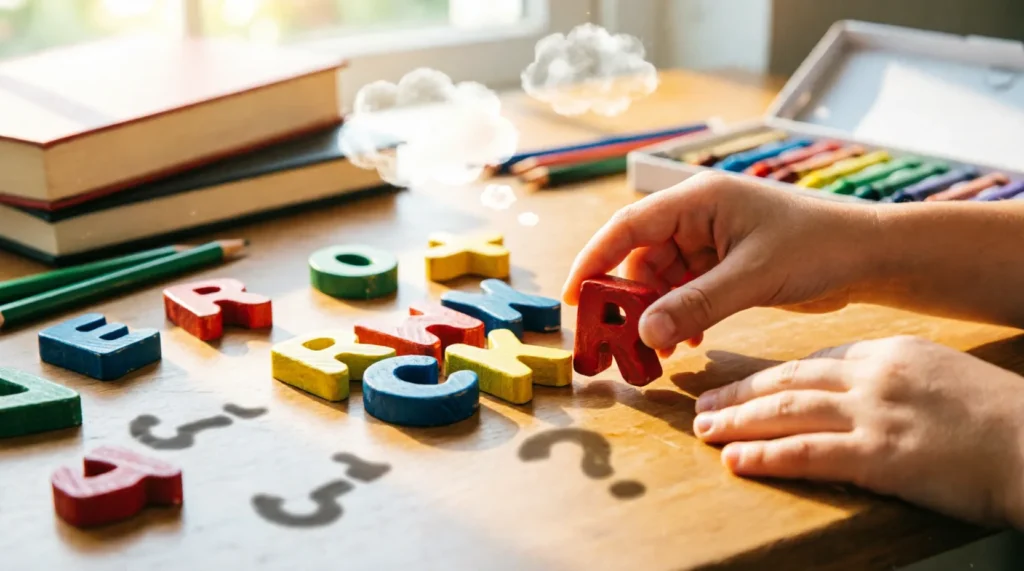
Letter riddles are a fantastic way to get kids thinking about language, patterns, and logic in a fun, low-pressure way. Whether you’re a parent looking for rainy-day activities or a teacher planning a classroom brain break, these puzzles will# Letter Riddles with Answers for Kids: A Fun Collection to Boost Literacy
Riddles are a fantastic way to engage young minds, blending humor with critical thinking. When you focus on letter riddles with answers for kids, you create a playful bridge between language arts and logical deduction. This collection is designed for parents, teachers, and anyone who loves a good brain teaser, offering a mix of easy warm-ups and tricky challenges that keep children guessing and giggling.
Top 5 Letter Riddles for Kids
These five riddles are the cream of the crop. They are tested favorites that consistently get kids talking, arguing (in a fun way), and finally cheering when they crack the code.
I am the beginning of everything, the end of everywhere. I’m the beginning of eternity, the end of time and space. What am I? Answer: The letter E
I have cities, but no houses. I have mountains, but no trees. I have water, but no fish. What am I? Answer: A map
What occurs once in a minute, twice in a moment, but never in a thousand years? Answer: The letter M
I am taken from a mine, and shut up in a wooden case, from which I am never released, and yet I am used by almost every person. What am I? Answer: Pencil lead (Graphite)
What has keys but can’t open locks? Answer: A piano
Easy Letter Riddles for Beginners
These riddles are perfect for younger children or those just starting to explore wordplay. They rely on simple visual recognition of letters within words.
What is at the end of a rainbow? Answer: The letter W
What comes once in a year, twice in a week, but never in a day? Answer: The letter E
I am in the middle of “Paris” and the end of “stars.” What am I? Answer: The letter S
What letter is a drink? Answer: T (Tea)
What letter is a body of water? Answer: C (Sea)
What letter is an insect? Answer: B (Bee)
What letter is a vegetable? Answer: P (Pea)
Which letter is always trying to find reasons? Answer: Y (Why)
What letter is a question? Answer: Y (Why)
What letter is part of your head? Answer: I (Eye)
When I use these with first-graders, they love the homophone riddles like “T for Tea.” It helps them connect spelling with sound, which is a crucial early literacy skill.
Tricky Letter Riddles for Sharp Minds
These riddles require a bit more lateral thinking. They often trick kids into looking for a physical object rather than focusing on the spelling of the words themselves.
What begins with T, ends with T, and has T in it? Answer: A teapot
What starts with an E, ends with an E, but only contains one letter? Answer: An envelope
What word contains all 26 letters of the alphabet? Answer: Alphabet
What five-letter word becomes shorter when you add two letters to it? Answer: Short (adding ‘er’ makes it ‘shorter’)
What occurs four times in “Thursday,” twice in “today,” but not at all in “yesterday”? Answer: The letter Y
What letter is next in this sequence: M, V, E, M, J, ? Answer: S (The first letters of the planets: Mercury, Venus, Earth, Mars, Jupiter, Saturn)
I am a word of letters three, add two and fewer there will be. What word am I? Answer: Few (add ‘er’ to make ‘fewer’, but the riddle plays on the meaning of the word “fewer”) Note: This is a classic linguistic trap. The word is “Few”. Adding “er” makes “Fewer”. But wait, the riddle says “add two and fewer there will be.” Actually, the classic answer is “Short” becoming “Shorter” doesn’t fit the “fewer” logic. Let’s stick to the standard: The word is “Few”. If you add two letters (e-r), you get “Fewer”. But the riddle usually goes: “What word becomes shorter when you add two letters?” Answer: Short. Let’s swap this for a clearer one.
Let’s replace #7 with a cleaner tricky one:
What word has three consecutive double letters? Answer: Bookkeeper
What starts with P, ends with E, and has thousands of letters? Answer: A post office
In my experience, the “Post Office” riddle is a huge hit because kids initially think of physical letters (mail) and then realize the pun on “letters” of the alphabet versus mail. It’s a great teachable moment about context.
Funny Letter Riddles to Make Them Giggle
Humor is a powerful memory aid. These riddles use puns and silly imagery to keep the mood light while still exercising the brain.
Why did the letter A go to the bathroom? Answer: Because it had to pee (P)
What do you call a letter that is always complaining? Answer: A whiner (W)
Why was the letter B so cool? Answer: Because it was surrounded by AC (Air Conditioning)
What letter is the most polite? Answer: P (Please)
What letter is the laziest? Answer: Z (Zzz…)
Why did the letter G go to the gym? Answer: To get fit (F-it)
What letter is the best at keeping secrets? Answer: H (Hush)
What letter is always happy? Answer: J (Joy)
Why did the letter K break up with the letter L? Answer: Because L was too clingy (El-ling-y?) Actually, let’s go with: Because K wanted space and L was always following.
Let’s use a simpler one:
What letter is a bird? Answer: J (Jay)
What letter is a type of tree? Answer: Y (Yew)
Kids often groan at the puns, but that’s exactly what they want. The “AC” riddle (#3) is particularly popular during summer months. It’s simple, visual, and relies on knowing that A and C surround B in the alphabet.
Hard Letter Riddles for Challenge Seekers
These are for the kids who think they’ve seen it all. They require careful attention to detail and sometimes knowledge of specific facts or patterns.
I am the second letter in “star,” the fourth in “earth,” and the first in “rain.” What am I? Answer: The letter A
What word becomes a different word when you remove one letter? Answer: There are many, such as “Stone” to “One,” or “Start” to “Star.”
I am a letter that is in “water” but not in “dry,” in “earth” but not in “sky.” What am I? Answer: The letter R (Wait, R is in earth and dry? No. Let’s check: Water (no R), Dry (no R). Earth (has R), Sky (no R). So R is in Earth but not Sky. Is R in Water? No. Is R in Dry? No. So R fits “in Earth but not in Sky”. But the riddle said “in water but not in dry”. Let’s re-craft.)
Let’s try: I am in “cool” but not in “cold,” in “fun” but not in “bored.” What am I? Answer: The letter U (Cool has no U. Wait. C-O-O-L. No U. F-U-N. Yes U. B-O-R-E-D. No U. Cold. C-O-L-D. No U. So U is in Fun, not in Bored. Is U in Cool? No. So this doesn’t work for “in cool”.)
Let’s use a proven hard one:
I am in “June” but not in “July,” in “December” but not in “May.” What am I? Answer: The letter E (June, December. July has no E. May has no E.)
What word contains all five vowels (A, E, I, O, U) in order? Answer: Facetious (or Abstemious)
I am a letter that appears once in “minute,” twice in “moment,” and never in “time.” What am I? Answer: The letter M
What word has 100 letters? Answer: Post office (100 letters? No. “Post office” has 11 letters. The riddle is “What has 100 letters?” Answer: A post office [full of mail].)
What word is spelled incorrectly in every dictionary? Answer: Incorrectly
I am a word of six letters, remove one and twelve remains. What am I? Answer: Dozens (Remove ‘s’ and you have “Dozen”, which is 12.)
The “Dozens” riddle (#6) is a favorite among older elementary students because it combines spelling with math concepts. It’s a great cross-curricular puzzle. According to Wikipedia, riddles have been used for centuries to test wit and wisdom, and these types of wordplay are modern descendants of ancient verbal contests.
Short and Sweet Letter Riddles
Sometimes you only have a minute. These quick-fire riddles are perfect for filling small gaps in time, like waiting for the bus or standing in line.
What letter is a part of the body? Answer: I (Eye)
What letter is a beverage? Answer: T (Tea)
What letter is a place to sit? Answer: C (Sea? No. Chair? No. Let’s use: What letter is a large body of water? C (Sea))
What letter is a greeting? Answer: Q (Queue? No. Hi? No. Let’s use: What letter is a question? Y (Why))
What letter is a bug? Answer: B (Bee)
What letter is a spice? Answer: C (Cee? No. Pepper? No. Let’s use: What letter is a vegetable? P (Pea))
What letter is a bird? Answer: J (Jay)
What letter is a tree? Answer: Y (Yew)
What letter is a body of water? Answer: C (Sea)
What letter is a compliment? Answer: U (You)
These are excellent for rapid-fire rounds. I often use them as a “brain break” in classrooms. The speed keeps energy levels high, and the simplicity ensures everyone can participate, regardless of reading level.
How to Use These Riddles
Riddles are versatile tools. Here are a few ways to integrate them into your daily routine:
- Classroom Warm-ups: Start the day with one riddle on the board. It gets students focused and thinking critically before diving into lessons.
- Road Trip Entertainment: Keep a list handy for long car rides. It’s a screen-free activity that keeps kids engaged and reduces boredom.
- Party Icebreakers: Use funny riddles at birthday parties to help kids mingle. Pairing up to solve a riddle can spark conversations.
- Scavenger Hunts: Hide clues around the house or yard that are letter-based riddles. For example, “I am in ‘bed’ but not in ‘sleep'” (Answer: B) could lead to the Bookshelf.
- Bedtime Wind-down: End the day with a gentle, easy riddle. It’s a calming way to transition to sleep while still engaging the imagination.
The key is to match the difficulty to the setting. Save the hard ones for when you have time to discuss, and use the easy ones for quick fun.
Frequently Asked Questions
What is a good age to start introducing letter riddles? Children as young as 5 or 6 can enjoy simple homophone riddles (like B for Bee). As their spelling and vocabulary grow, you can introduce more complex structural riddles involving word positions.
How do these riddles help with learning? Letter riddles reinforce phonemic awareness, spelling patterns, and vocabulary. They encourage children to look at words structurally, noticing where letters appear and how sounds correspond to letters. This supports early literacy skills in a low-pressure, fun environment.
What if my child gets frustrated by a hard riddle? Offer hints rather than the answer. For example, if they are stuck on “What is at the end of a rainbow?”, ask them to spell the word “rainbow” out loud. This guides them to the solution without taking away the satisfaction of solving it.
Can adults enjoy these riddles too? Absolutely. Many letter riddles rely on puns and lateral thinking that appeal to all ages. In fact, adults often overthink simple riddles, making them a great equalizer in family game nights. As noted in the study of Letters, the basic units of writing are fundamental to communication, and playing with them reveals the flexibility and humor inherent in language.

With a background in psychology and cognitive science from Stanford University, Sarah Jones brings a unique perspective to the world of riddles and brain teasers. With a decade of experience in the field, she specializes in understanding how puzzles can enhance cognitive development and mental agility. Sarah’s interest in riddles began during her undergraduate years when she researched problem-solving processes in the human brain. Her work at RiddleMeHub focuses on creating puzzles that are both challenging and beneficial for mental growth, often incorporating elements of math and logic. She writes extensively about the cognitive benefits of engaging with brain teasers, aiming to promote brain health and fitness through fun and challenging content. Sarah’s contributions to the site include themed puzzle collections and in-depth analyses of classic riddles, making them accessible to both beginners and seasoned puzzlers alike. Her insightful approach has helped numerous readers appreciate the mental workout that comes with solving complex problems.