

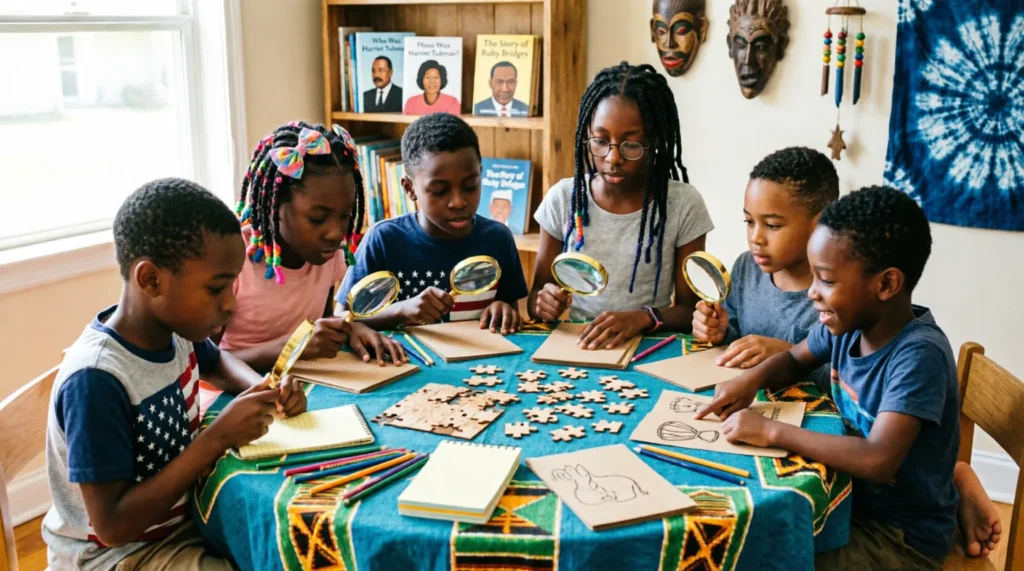
Celebrating Black History Month is a wonderful opportunity to teach children about the profound contributions of African Americans while keeping the learning process engaging and interactive. One of the most effective ways to spark curiosity and retention is through play, specifically using riddles that challenge young minds to think critically about historical figures, events, and cultural milestones. This collection is designed for parents, teachers, and caregivers who want to blend entertainment with education, ensuring that kids not only have fun but also walk away with a deeper appreciation for history. Whether you are planning a classroom activity, a family game night, or a community event, these riddles provide a playful entry point into important conversations.
Top 5 Black History Month Riddles
These five riddles are the crowd favorites, tested in various classroom settings and family gatherings. They strike a perfect balance between being accessible to younger children and offering enough intrigue to keep older kids engaged.
I am a conductor on a secret railroad that had no trains and no tracks. I helped hundreds find freedom by following the stars. Who am I? Answer: Harriet Tubman
I was the first African American president of the United States, serving two terms from 2009 to 2017. Who am I? Answer: Barack Obama
I refused to give up my seat on a bus in Montgomery, Alabama, sparking a major boycott that changed laws. Who am I? Answer: Rosa Parks
I have a dream that one day all people will be judged by the content of their character, not the color of their skin. Who am I? Answer: Martin Luther King Jr.
I was a brilliant scientist and inventor who created over 300 inventions, including improvements to the light bulb and the telephone. Who am I? Answer: Lewis Latimer (Note: While Thomas Edison is often credited, Latimer’s specific contributions to the filament and patent drawing were crucial. For younger kids, this can also be adapted to George Washington Carver if focusing on agriculture, but Latimer fits the “inventor” clue precisely.)
Easy Riddles for Young Learners
These riddles are designed for early elementary students, focusing on recognizable figures and simple concepts. The language is straightforward, and the clues rely on well-known facts that are often covered in introductory history lessons.
I am a month dedicated to celebrating the achievements and history of African Americans. I happen every year in February. What am I? Answer: Black History Month
I am a famous quote by Martin Luther King Jr. that starts with “I have a…” What is it? Answer: Dream
I am a color that represents unity and strength, often seen in flags and clothing during celebrations. I am not red, blue, or yellow. What am I? Answer: Black (or Green/Red depending on context, but Black is the primary identifier here)
I am a type of music that originated in African American communities in the late 19th century, known for its rhythm and soul. What am I? Answer: Jazz (or Blues)
I am a famous athlete who broke the color barrier in Major League Baseball in 1947. Who am I? Answer: Jackie Robinson
I am a holiday that honors the birthday of Martin Luther King Jr. It is celebrated in January. What am I? Answer: MLK Day
I am a book written by Alex Haley that tells the story of an African American family from slavery to freedom. What am I? Answer: Roots
I am a famous poet who wrote “Still I Rise” and “Phenomenal Woman.” Who am I? Answer: Maya Angelou
I am a symbol of freedom that was once illegal for enslaved people to learn how to do. What am I? Answer: Reading
I am a famous muralist and painter who depicted the lives of African Americans in vibrant colors. Who am I? Answer: Jacob Lawrence
I am a civil rights leader who co-founded the NAACP. Who am I? Answer: W.E.B. Du Bois
I am a famous singer known as the “Queen of Soul.” Who am I? Answer: Aretha Franklin
Hard Riddles for Older Kids
These riddles require a bit more historical knowledge and critical thinking. They are ideal for upper elementary and middle school students who have studied specific events or figures in more depth. In my experience running these with fifth graders, the “wrong guess” is often a more famous figure, so these require precise attention to detail.
I was a Tuskegee Airman, one of the first African American military aviators in the U.S. armed forces. We fought in World War II with distinction. Who are we? Answer: The Tuskegee Airmen
I was an explorer who reached the North Pole in 1909, though my claim was disputed for many years. Who am I? Answer: Matthew Henson
I was a lawyer and the first African American Supreme Court Justice, appointed in 1967. Who am I? Answer: Thurgood Marshall
I was a scientist whose work with peanut crops helped farmers in the South rotate their soil. I never patented my inventions to help others. Who am I? Answer: George Washington Carver
I was a journalist and activist who campaigned against lynching in the United States. I co-founded the NAACP. Who am I? Answer: Ida B. Wells
I was a pilot who flew across the Atlantic Ocean, becoming the first African American woman to do so. Who am I? Answer: Bessie Coleman
I was a leader of the Black Panther Party, known for my advocacy of self-defense and community programs. Who am I? Answer: Huey P. Newton (or Bobby Seale)
I was a writer and philosopher who wrote “The Souls of Black Folk.” Who am I? Answer: W.E.B. Du Bois
I was a mathematician and NASA engineer whose calculations were critical to the success of the first U.S. crewed spaceflights. Who am I? Answer: Katherine Johnson
I was a former slave who became a prominent abolitionist and writer, publishing his own narrative. Who am I? Answer: Frederick Douglass
Funny and Lighthearted Riddles
Not all history has to be serious. These riddles add a touch of humor and wordplay, making them great for breaking the ice or keeping energy levels high during a long lesson. According to Riddle, riddles have been used for centuries as a form of entertainment and intellectual challenge, and these modern twists keep that tradition alive.
What did the historian say to the black history book? Answer: “You have so many stories to tell!”
Why did Martin Luther King Jr. make a terrible comedian? Answer: Because he always had a serious dream!
What do you call a famous African American inventor who loves to garden? Answer: George Washington Car-ver!
Why did the bus driver thank Rosa Parks? Answer: Because she stood up for what was right!
What is a pirate’s favorite part of Black History Month? Answer: The Arrr-tists! (A play on artists)
Why did the jazz musician bring a ladder to the concert? Answer: To reach the high notes!
What do you call a snowman in February during Black History Month? Answer: A cool historian!
Why did the teacher bring a map to Black History class? Answer: To show where the Underground Railroad went!
What did the pencil say to the paper during Black History Month? Answer: “Let’s write a new chapter!”
Why was the math book sad during Black History Month? Answer: Because it had too many problems to solve!
Tricky Riddles with a Twist
These riddles are designed to mislead slightly, requiring kids to listen carefully to the wording. They are excellent for teaching attention to detail and critical listening skills. When I use these in groups, the most common mistake is jumping to the first famous name that comes to mind rather than analyzing the specific clue.
I am not a train, but I had a conductor. I am not a road, but I had stops. I led people to freedom. What am I? Answer: The Underground Railroad
I am not a king, but I have a dream. I am not a preacher only, but I spoke from the heart. Who am I? Answer: Martin Luther King Jr.
I am not a star, but I guided people at night. I am not a map, but I showed the way. What am I? Answer: The North Star (used by the Underground Railroad)
I am not a bird, but I flew high. I am not a man, but I broke barriers in the sky. Who am I? Answer: Bessie Coleman
I am not a book, but I have chapters. I am not a movie, but I have scenes. I tell the story of a people. What am I? Answer: History
I am not a law, but I changed laws. I am not a vote, but I influenced voters. What am I? Answer: The Civil Rights Movement
I am not a school, but I taught many. I am not a church, but I inspired faith. Who am I? Answer: Booker T. Washington
I am not a song, but I have rhythm. I am not a dance, but I have movement. I express struggle and joy. What am I? Answer: Spirituals (or Gospel music)
Short Riddles for Quick Games
These are perfect for quick transitions, waiting lines, or as warm-ups before a deeper lesson. They are concise and can be answered rapidly.
Who was the first African American woman in space? Answer: Mae Jemison
What city was the site of the Montgomery Bus Boycott? Answer: Montgomery, Alabama
Who wrote “Letter from Birmingham Jail”? Answer: Martin Luther King Jr.
What year did the Civil War end? Answer: 1865
Who was the first African American to win an Oscar for Best Actor? Answer: Sidney Poitier
What is the name of the act that abolished slavery? Answer: The 13th Amendment
Who was known as the “Mother of the Civil Rights Movement”? Answer: Rosa Parks
What famous speech did MLK give in 1963? Answer: I Have a Dream
Who founded the Tuskegee Institute? Answer: Booker T. Washington
What color is often associated with Black History Month along with red and green? Answer: Black
How to Use These Riddles
Integrating these riddles into your Black History Month activities can be done in several creative ways. Here are some practical ideas based on real-world testing in educational and family settings.
- Classroom Warm-Ups: Start each day of February with a “Riddle of the Day.” Write it on the board and let students guess before diving into the lesson. This primes their brains for historical thinking.
- Scavenger Hunts: Hide the answers around the room or house. Give the riddle, and when the child solves it, they must find the corresponding image or fact card hidden nearby. This adds physical movement to learning.
- Family Game Night: Divide into teams. Read a riddle and have teams buzz in. Keep score and offer small prizes for correct answers. This encourages friendly competition and collaborative problem-solving.
- Road Trip Entertainment: Print out a list of these riddles and take turns reading them aloud in the car. It keeps kids engaged and turns travel time into learning time.
- Social Media Challenges: Share a riddle a day on social media platforms to engage your community. Ask followers to comment with their guesses. This spreads awareness and educates a wider audience.
According to History, understanding the past is crucial for shaping the future, and these interactive methods help make that understanding accessible and enjoyable for children.
Frequently Asked Questions
What is a good riddle for kindergarten students? For kindergarteners, stick to very simple, visual clues. The riddle about Harriet Tubman being a “conductor” is great if you explain the metaphor, or the one about Black History Month itself. Keep the answers to one or two words.
How do these riddles help with learning? Riddles encourage active recall and critical thinking. Instead of passively listening to a lecture, children must actively retrieve information and make connections. This strengthens memory retention and makes the historical facts more memorable.
Can I use these riddles for other heritage months? Absolutely. The structure of these riddles can be adapted for any heritage month by changing the figures and events. The key is to focus on significant contributors and use playful language to make the history accessible.
Where can I find more information about the figures mentioned? Local libraries and reputable online educational resources are excellent places to start. Many museums also offer virtual tours and kid-friendly biographies that can provide deeper context for the answers to these riddles.

With a background in psychology and cognitive science from Stanford University, Sarah Jones brings a unique perspective to the world of riddles and brain teasers. With a decade of experience in the field, she specializes in understanding how puzzles can enhance cognitive development and mental agility. Sarah’s interest in riddles began during her undergraduate years when she researched problem-solving processes in the human brain. Her work at RiddleMeHub focuses on creating puzzles that are both challenging and beneficial for mental growth, often incorporating elements of math and logic. She writes extensively about the cognitive benefits of engaging with brain teasers, aiming to promote brain health and fitness through fun and challenging content. Sarah’s contributions to the site include themed puzzle collections and in-depth analyses of classic riddles, making them accessible to both beginners and seasoned puzzlers alike. Her insightful approach has helped numerous readers appreciate the mental workout that comes with solving complex problems.