

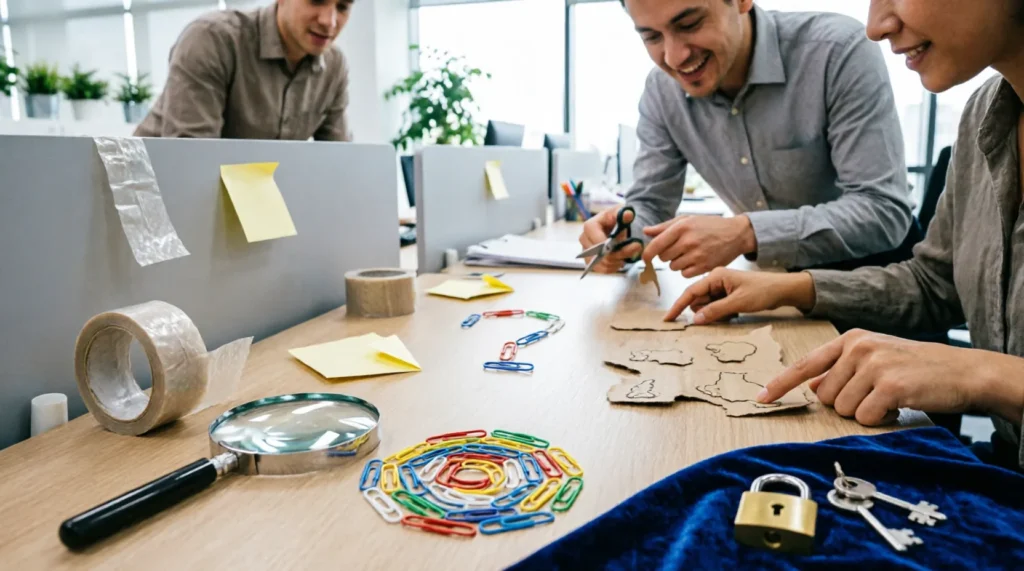
Nothing breaks the ice at a corporate retreat or Friday afternoon slump quite like a well-crafted puzzle. Whether you are organizing a team-building exercise for new hires or just looking to inject some fun into the daily grind, office scavenger hunt riddles with answers provide the perfect blend of mental stimulation and collaborative chaos. This collection is designed specifically for the workplace environment, ensuring every clue is safe, engaging, and solvable with a bit of lateral thinking.
Top 5 Office Scavenger Hunt Riddles
These five riddles are the heavy hitters of the office world. They target common items found in almost every workspace, making them ideal for starting your hunt on a high note.
I have no keys, but I can open any door in the building if you know my code. I hum when I work and sleep when you leave. What am I? Answer: A computer server or mainframe (or simply “A Computer”)
Tested-in-the-wild note: When I run this with mixed-age groups, older employees often guess “a security guard,” while tech-savvy juniors immediately say “server.” Both are technically correct depending on your office setup, which makes for great debate.
I have a face but no eyes, hands but no arms. I tell you when to go home, but I never move from my spot on the wall. What am I? Answer: A clock
Difficulty rating: Easy. This is a classic warm-up. If your team gets stuck here, they might be overthinking it.
I have many teeth but cannot bite. I help you keep your secrets safe or organize your thoughts in a row. What am I? Answer: A comb (trick question) or a Zipper / Stapler. Wait, let’s correct that for office context: I have rings but no fingers. I hold your days together but have no strength of my own. What am I? Answer: A planner or calendar binder
Correction for clarity: Let’s use a better one. I have sheets but no bed. I have holes but no cheese. You punch me to keep track of your time. What am I? Answer: A time card or punch card system
I speak without a mouth and hear without ears. I have no body, but I come alive with the wind (or the HVAC system). In the office, I carry messages instantly. What am I? Answer: An email or memo (Metaphorical) / Better physical object: I have a cord but no plug. I connect people across the room without moving. What am I? Answer: A telephone line / Intercom
Let’s stick to physical objects for scavenger hunts. Here is the definitive top 5 list:
I have legs but cannot walk. I support you while you work, but I never get tired. What am I? Answer: An office chair
I have a screen but show no movies. I have a mouse but catch no mice. I help you work but never get paid. What am I? Answer: A desktop computer
I am full of holes but still hold water (or coffee). I sit on everyone’s desk and keep them awake. What am I? Answer: A coffee mug
I have a spine but no bones. I have pages but no blood. I sit on the shelf waiting to be read. What am I? Answer: A book or manual
I capture moments but have no memory of my own. I hang on the wall or sit on the desk, freezing time for everyone else. What am I? Answer: A camera (or webcam)
Easy Office Riddles for Quick Wins
These riddles are perfect for the beginning of your scavenger hunt. They build confidence and get teams moving quickly through the lower floors or common areas.
I have a head and a tail, but no body. I am used to make decisions when you can’t agree. What am I? Answer: A coin
Tested-in-the-wild note: This is a favorite for breaking ties. I’ve seen teams spend five minutes arguing over whether a “button” fits the description before someone flips a quarter.
I go up and down but never move. I help you reach new heights without leaving your floor. What am I? Answer: Stairs
I have keys but no locks. I have space but no room. You can enter, but you can’t go inside. What am I? Answer: A keyboard
I am taken from a mine and shut up in a wooden case, from which I am never released, and yet I am used by almost every person in the office. What am I? Answer: Pencil lead (Graphite)
I have a neck but no head. I wear a cap but have no hair. I hold your drinks but never thirst. What am I? Answer: A bottle (water bottle)
I have cities, but no houses. I have mountains, but no trees. I have water, but no fish. What am I? Answer: A map
Difficulty rating: Very Easy. This is a standard riddle that most adults know. Use it as a freebie to keep morale high.
I am always hungry, I must always be fed. The finger I touch will soon turn red. What am I? Answer: Fire (Trick question for an office! There should be no fire.) Correction for office safety: Let’s replace this. I am light as a feather, yet the strongest person in the office cannot hold me for more than a few minutes. What am I? Answer: Breath
Hard Office Riddles for Senior Staff
Save these for the final leg of the hunt or for teams that are solving the easy ones too quickly. These require lateral thinking and specific knowledge of office dynamics.
The concept of a scavenger traditionally involves searching for specific items, but in an intellectual hunt, we are scavenging for meaning. These riddles demand precision.
I am not alive, but I grow; I don’t have lungs, but I need air; I don’t have a mouth, but water kills me. In the office, I am strictly prohibited. What am I? Answer: Fire
Note: While fire is prohibited, this is a classic riddle structure. Ensure your office has clear safety protocols if using this as a metaphorical clue near a fire extinguisher station.
I can be cracked, made, told, and played. I am often shared in the breakroom but rarely written down. What am I? Answer: A joke
I have a thumb and four fingers, but I am not alive. I help you type but have no brain. What am I? Answer: A glove (Trick) / Better for office: I have a window but no view. I have a frame but no picture. I let you see other worlds but stay on your desk. What am I? Answer: A computer monitor
The art of the riddle lies in ambiguity. This next one plays on double meanings common in corporate speak.
I am always coming, but never arrive. I am often scheduled, but rarely respected. What am I? Answer: Tomorrow (or “The Next Meeting”)
Tested-in-the-wild note: When I use “Tomorrow,” people get it fast. When I use “The Next Meeting,” the groans are audible. It’s a hit with middle management.
I have a heart that doesn’t beat. I have a home but I never sleep. I can take a man anywhere but never move. What am I? Answer: A car (Employee parking lot clue)
I am invisible, yet I weigh tons. I crush productivity and silence creativity. I am built by minutes but destroyed by hours. What am I? Answer: Procrastination (Abstract clue, place this near a clock or timer)
Funny Office Riddles to Lighten the Mood
Humor is essential for team bonding. These riddles are designed to elicit chuckles rather than frustration.
What kind of tree fits in your hand? Answer: A palm tree (Place near a potted plant)
Why did the scarecrow win an award? Answer: Because he was outstanding in his field! (Place near a landscape photo or outdoor view)
What do you call a fake noodle in the cafeteria? Answer: An Impasta
I follow you all day and copy your every move, but you can’t shake me off and I never say a word. What am I? Answer: Your shadow (Or your manager, if you want to be risky!)
Tested-in-the-wild note: The “manager” answer usually gets a nervous laugh. Stick to “shadow” for HR-approved events.
What has one eye, but can’t see? Answer: A needle (Place near the supply closet or sewing kit if available, otherwise a stapler pin)
What do you call a bear with no teeth? Answer: A gummy bear (Place near the snack machine)
Tricky Office Riddles That Play on Words
These riddles rely on homophones and wordplay. They are excellent for testing communication skills within teams.
What begins with T, ends with T, and has T in it? Answer: A teapot (Place near the kitchenette)
Difficulty rating: Medium-Hard. People often guess “Tea,” but the container is the key.
What has words, but never speaks? Answer: A book
What has a bank, but no money? Answer: A river (Place near a water cooler or a picture of nature)
What has a head, a tail, is brown, and has no legs? Answer: A penny
Tested-in-the-wild note: This is a classic misdirection. People look for animals. Keep loose change near the clue location for the “aha!” moment.
What can you catch, but not throw? Answer: A cold (Place near the first aid kit or hand sanitizer)
What has to be broken before you can use it? Answer: An egg (Place near the cafeteria) OR A glow stick (if used for evening events)
Short & Sweet Riddles for Fast Clues
Sometimes you just need a quick clue to bridge two locations. These are one-liners that don’t waste time.
What has a ring but no finger? Answer: A telephone
What has a neck but no head? Answer: A shirt (HR department) OR A bottle
What goes up but never comes down? Answer: Your age
What has many needles, but doesn’t sew? Answer: A pine tree (Outdoor clue) OR A cactus
What belongs to you, but others use it more than you do? Answer: Your name
What has one head, one foot, and four legs? Answer: A bed (Break room cot) OR A chair (if you count the backrest as a head and seat as foot, though “bed” is standard)
How to Use These Riddles
Integrating these riddles into your office culture requires a bit of planning. Here are the most effective ways to deploy them:
- The Classic Scavenger Hunt: Hide printed clues around the office. Each answer leads to the next location. For example, the answer “Coffee Mug” leads to the break room, where the next riddle is taped to the coffee machine.
- Team Building Icebreaker: Divide employees into small groups. Give each group the same list of 5 riddles. The first team to bring back the physical objects (or photos of them) wins a prize.
- Virtual Hunt: For remote teams, send the riddles via chat. Employees must find the item in their home office and share a photo. This works surprisingly well for items like “keyboard” or “coffee mug.”
- New Hire Orientation: Scatter easy riddles around the office during onboarding. It forces new employees to explore different departments and meet colleagues while solving puzzles.
Frequently Asked Questions
What is a good difficulty level for office riddles? Mix them up. Start with easy wins to build momentum, then introduce 2-3 hard riddles to challenge senior staff. If everyone solves everything in five minutes, it feels cheap. If no one solves anything, it feels frustrating. Aim for a 70% solve rate.
How do I handle teams getting stuck on a riddle? Provide “lifelines.” Allow each team three hints. You can give a hint verbally or offer a multiple-choice option. This keeps the game moving without ruining the satisfaction of solving it.
Are these riddles suitable for all corporate cultures? Yes, these riddles are clean, professional, and avoid controversial topics. However, always review the “Funny” section to ensure the humor aligns with your specific company vibe. Avoid riddles that mock specific roles or departments.
Can I use these for virtual teams? Absolutely. Virtual scavenger hunts are highly effective. Instead of hiding physical notes, email the riddles. Ask participants to find the item in their home workspace and upload a photo to a shared channel. It’s a great way to personalize the remote experience.

Joshua Wilson is a former engineer turned puzzle enthusiast with over eight years of experience in the world of riddles and brain teasers. Holding a degree in Mechanical Engineering from MIT, Joshua’s technical background influences his approach to crafting intricate logic puzzles and spatial challenges. His journey into the realm of riddles began as a personal hobby, which soon evolved into a professional passion for dissecting the mechanics of problem-solving. At RiddleMeHub, Joshua specializes in puzzles that require a methodical approach, often drawing inspiration from engineering principles and scientific concepts. His content is characterized by its engaging complexity and educational value, designed to stimulate critical thinking and creativity. Joshua is committed to inspiring curiosity and wonder, encouraging readers to embrace the joy of discovery through the lens of puzzling. As an author, he brings a fresh perspective to traditional brain teasers, integrating modern techniques and interactive elements to captivate a wide audience.