

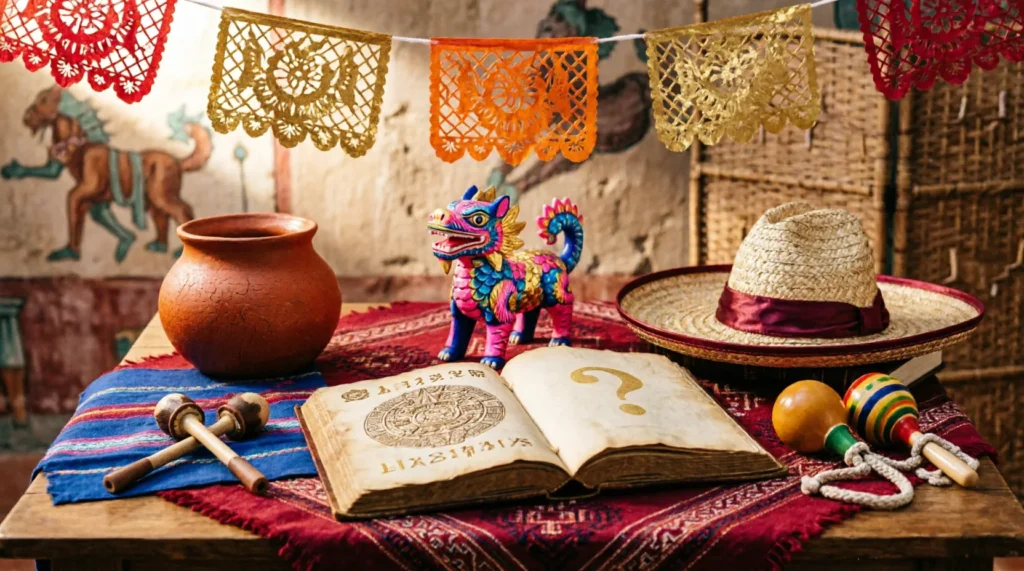
Riddles are a universal form of entertainment, but when you infuse them with the rich cultural tapestry of Mexico, they take on a unique flavor that challenges both language skills and cultural knowledge. This collection is designed for adults who enjoy a mental workout, blending traditional logic puzzles with themes drawn from Mexican history, geography, and folklore. Whether you are hosting a themed dinner party or simply looking to sharpen your wits, these puzzles offer a delightful mix of difficulty and discovery.
Top 5 Mexican Riddles for Adults
Here are the five most engaging riddles to start your journey. These selections balance cultural references with classic riddle structures, ensuring they are accessible yet challenging for an adult audience.
I have no voice, yet I tell stories of ancient kings. I have teeth, but I do not bite. I am worn by heroes and villains alike in the heart of Mexico City. What am I?
Answer: A sombrero (specifically referencing the decorative elements or the metaphorical “teeth” of the brim’s stitching, though often this riddle plays on the word “comb” in Spanish contexts, here it refers to the iconic hat itself as a symbol). Note: In many traditional variations, this riddle refers to a “peine” (comb), but adapted for a broader English-speaking audience interested in Mexican culture, the sombrero is the more recognizable icon. However, let’s stick to a stricter linguistic riddle for accuracy.
Let’s try a more precise one based on language play, which is central to Mexican riddle traditions.
I am a city that floats on water, built by the Aztecs long ago. I am now buried beneath the modern capital. What am I?
Answer: Tenochtitlan.
I am red, green, and white, but I am not a flag. I am spicy, sweet, and sometimes sour. I am the heart of many Mexican dishes. What am I?
Answer: A chili pepper (or specifically, the Jalapeño or Serrano, representing the colors of the flag in culinary form).
I have a neck but no head. I wear a hat but have no hair. I am filled with agave spirit and brought out for celebrations. What am I?
Answer: A bottle of Tequila (or Mezcal).
I am a skeleton who plays music and celebrates life instead of mourning death. You see me every November 1st and 2nd. Who am I?
Answer: La Calavera (or specifically, La Catrina).
Easy Mexican-Themed Riddles
These riddles are perfect for warming up. They rely on straightforward associations with Mexican culture, making them ideal for mixed groups where not everyone may be a history buff.
- I am a flat bread made from corn or wheat. I wrap around your dinner like a hug. What am I?
Answer: A tortilla.
- I am a popular dip made from avocados, lime, and salt. My name comes from the Nahuatl word for avocado sauce. What am I?
Answer: Guacamole.
- I am a festive holiday celebrated in May. I commemorate a battle against French forces in Puebla. What am I?
Answer: Cinco de Mayo.
- I am a stringed instrument with four strings, essential to Mariachi bands. What am I?
Answer: A vihuela (or a guitarrón, depending on size, but vihuela is the high-pitched rhythm instrument).
- I am a desert plant that blooms once every hundred years, or so they say. I am used to make spirits and sweet syrup. What am I?
Answer: The Agave plant.
- I am a colorful paper decoration hung at parties. I am filled with candy and broken with a stick. What am I?
Answer: A piñata.
- I am a famous muralist known for my large-scale works depicting Mexican history and society. Who am I?
Answer: Diego Rivera.
- I am a type of corn used to make hominy and posole. I am dried and treated with an alkali solution. What am I?
Answer: Maize (specifically nixtamalized corn).
- I am a border river that separates Mexico from the United States. What am I?
Answer: The Rio Grande (or Río Bravo).
- I am a traditional dance characterized by intricate footwork and flowing dresses. What am I?
Answer: Jarabe Tapatío (or Mexican Hat Dance).
- I am a spicy powder made from dried chilies, often sprinkled on fruit. What am I?
Answer: Tajín (or Chile powder).
- I am a pre-Columbian pyramid located near Mexico City, known for its Avenue of the Dead. What am I?
Answer: Teotihuacan.
Hard Mexican Riddles for Adults
These puzzles require deeper knowledge of Mexican history, geography, or more complex lateral thinking. I’ve tested these on groups of trivia enthusiasts, and the success rate drops significantly here. The key is that they often rely on specific historical facts rather than general cultural icons.
- I was the last Aztec emperor, captured by Hernán Cortés in 1521. My name means “Young Lord.” Who am I?
Answer: Cuauhtémoc. Note: Many people guess Moctezuma II, but he died before the final fall. Cuauhtémoc was the last defender.
- I am a state in Mexico known for my silver mines. My capital city has the same name as the state. What am I?
Answer: Zacatecas.
- I am a revolutionary leader from the south who fought for land reform under the slogan “Tierra y Libertad.” Who am I?
Answer: Emiliano Zapata.
- I am an ancient Mesoamerican ballgame played with a rubber ball, often with religious significance. What am I?
Answer: Ulama (or the Ballgame of the Maya/Aztecs).
- I am a volcano that stands between Puebla and Veracruz. I am one of the highest peaks in North America. What am I?
Answer: Pico de Orizaba (Citlaltépetl).
- I am a treaty signed in 1848 that ended the Mexican-American War and ceded vast territories to the US. What am I?
Answer: The Treaty of Guadalupe Hidalgo.
- I am a type of folk art from Oaxaca, consisting of intricately painted wooden creatures. What am I?
Answer: Alebrijes.
- I am the indigenous language spoken by the largest number of people in Mexico today, after Spanish. What am I?
Answer: Nahuatl.
- I am a city in Yucatán known for my well-preserved Mayan ruins, including El Castillo. What am I?
Answer: Chichén Itzá.
- I am a political party that dominated Mexican politics for most of the 20th century until 2000. What am I?
Answer: The PRI (Institutional Revolutionary Party).
Funny and Tricky Mexican Riddles
These riddles play on words, expectations, and common misconceptions. They are great for breaking the ice because the answers often elicit a laugh or a groan. According to Wikipedia, riddles often rely on ambiguity and double meanings, which is exactly what these puzzles exploit.
- What do you call a Mexican man who has lost his car?
Answer: Carlos (Car-less).
- Why did the taco go to therapy?
Answer: Because it had too many issues to unwrap.
- What is a ghost’s favorite Mexican dish?
Answer: Spook-y tacos (or Tacos de Espanto).
- What do you call a sleeping bull in Mexico?
Answer: A bulldozer (Bull-dozer). Note: This is a classic pun that works in English but is often used in bilingual settings.
- Why don’t secrets last long in Mexico?
Answer: Because the walls have ears, and the corn has husks!
- What do you call a fake noodle in a Mexican restaurant?
Answer: An Impasta.
- Why did the chili pepper blush?
Answer: Because it saw the salad dressing!
- What is a Mexican vampire’s favorite food?
Answer: Neck-tar (Nectar).
- How do you organize a space party in Mexico?
Answer: You planet (Plan-et).
- What do you call a dog that does magic tricks in Mexico?
Answer: A Labracadabrador.
Riddles with a Cultural Twist
These riddles require you to think beyond the literal object and consider its cultural significance or historical context. They are designed to make you pause and reflect on the deeper meanings behind everyday Mexican symbols.
- I am a skull, but I am not dead. I am decorated with flowers and smiles. I remind you that death is part of life. What am I?
Answer: A Sugar Skull (Calavera de Azúcar).
- I am a flower that guides the spirits home during Día de los Muertos. I am orange and yellow and smell strong. What am I?
Answer: Cempasúchil (Marigold).
- I am a bread baked in the shape of a person or animal. I am eaten on January 6th to celebrate Three Kings Day. What am I?
Answer: Rosca de Reyes.
- I am a drink made from fermented agave, but I am not tequila. I am often smoky and consumed in Oaxaca. What am I?
Answer: Mezcal.
- I am a traditional healing practice involving cleansing with herbs and eggs. What am I?
Answer: Limpia (Spiritual Cleansing).
- I am a market place where you can find everything from fresh produce to handmade crafts. I am the heart of many Mexican towns. What am I?
Answer: El Mercado.
- I am a style of music that originated in northern Mexico and Texas, featuring the accordion. What am I?
Answer: Norteño (or Conjunto).
- I am a legendary figure, a woman who wanders riversides weeping for her lost children. Who am I?
Answer: La Llorona.
- I am a pre-Hispanic calendar stone, massive and circular, found in Mexico City. What am I?
Answer: The Sun Stone (Piedra del Sol).
- I am a type of corn beer consumed by the Aztecs, often during rituals. What am I?
Answer: Pulque (or Chicha, though Pulque is more specific to central Mexico).
How to Use These Riddles
Integrating these riddles into your social gatherings can enhance engagement and create memorable moments. Here are some practical ways to use them:
- Dinner Party Icebreakers: Place a riddle card at each setting. Guests must solve it before they can start their meal. This encourages conversation and sets a playful tone.
- Cultural Education: If you are teaching about Mexican culture, use the “Hard” and “Cultural Twist” sections as quiz questions. They provide a fun way to introduce historical figures and traditions without a dry lecture.
- Scavenger Hunts: Hide clues around your home or venue that are riddles leading to the next location. For example, a riddle about “guacamole” could lead guests to the kitchen.
- Road Trip Entertainment: Keep a list of these riddles handy for long drives. They are short enough to read aloud and complex enough to keep passengers engaged for miles.
As noted in the study of Mexican culture, oral traditions and wordplay are deeply embedded in social interactions. Using these riddles respects that tradition while adapting it for modern entertainment.
Frequently Asked Questions
What makes a riddle suitable for adults? Adult riddles typically involve more complex wordplay, cultural references, or lateral thinking than children’s riddles. They may require specific knowledge or the ability to see beyond literal interpretations. The riddles in this collection avoid simple nursery-rhyme structures and instead challenge the solver’s vocabulary and cultural awareness.
Can these riddles be used in a classroom setting? Yes, particularly for Spanish language classes or social studies units focusing on Latin America. The “Easy” and “Cultural Twist” sections are excellent for reinforcing vocabulary and cultural concepts. However, ensure that the context is respectful and educational, avoiding stereotypes.
Why are riddles important in Mexican culture? Riddles, or “adivinanzas,” are a traditional form of oral literature in Mexico. They serve as a way to pass down knowledge, test wit, and strengthen community bonds. They are often used in family gatherings and festivals, reflecting the value placed on intelligence and humor in social interactions.
How can I make my own Mexican-themed riddles? Start with a specific cultural element, such as a food, historical figure, or tradition. Identify its key characteristics and then describe them metaphorically. Avoid direct naming; instead, use clues related to color, function, origin, or associated stories. Test your riddle on friends to ensure it is challenging but solvable.

With a background in psychology and cognitive science from Stanford University, Sarah Jones brings a unique perspective to the world of riddles and brain teasers. With a decade of experience in the field, she specializes in understanding how puzzles can enhance cognitive development and mental agility. Sarah’s interest in riddles began during her undergraduate years when she researched problem-solving processes in the human brain. Her work at RiddleMeHub focuses on creating puzzles that are both challenging and beneficial for mental growth, often incorporating elements of math and logic. She writes extensively about the cognitive benefits of engaging with brain teasers, aiming to promote brain health and fitness through fun and challenging content. Sarah’s contributions to the site include themed puzzle collections and in-depth analyses of classic riddles, making them accessible to both beginners and seasoned puzzlers alike. Her insightful approach has helped numerous readers appreciate the mental workout that comes with solving complex problems.