

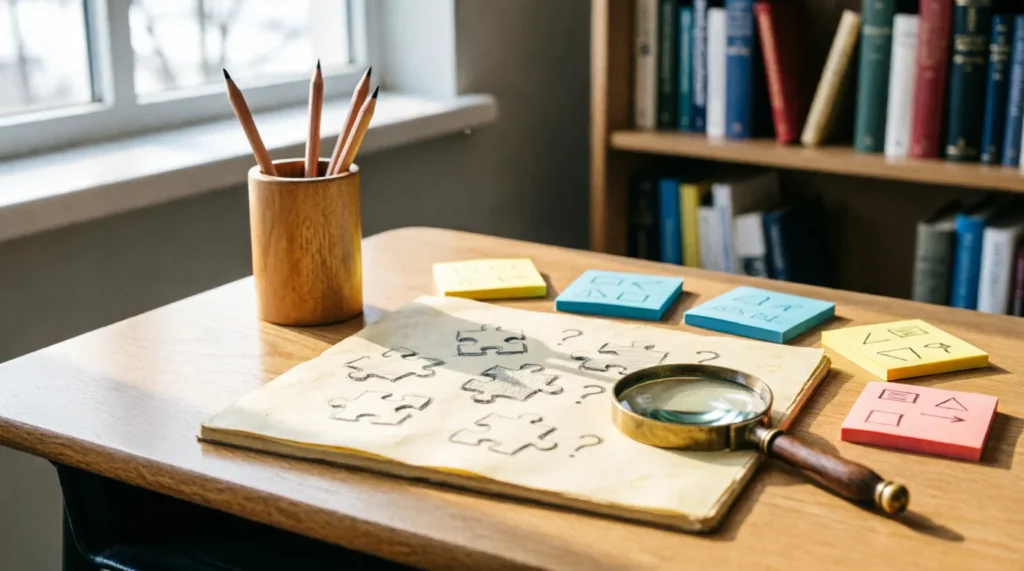
High school is a unique time where intellectual curiosity meets social dynamics, making it the perfect environment for mental challenges. Daily riddles for high school students offer more than just a quick laugh; they serve as excellent icebreakers, critical thinking exercises, and engaging ways to start a class or end a long day. This collection is curated specifically for teenagers who are ready to move beyond simple children’s puzzles and tackle logic, wordplay, and lateral thinking problems that actually respect their intelligence.
Whether you are a teacher looking for a bell-ringer activity, a student wanting to stump your friends at lunch, or a parent trying to connect with your teen, these riddles strike the right balance between tricky and solvable. Let’s dive into some of the best brain teasers available.
Top 5 Daily Riddles for High School Students
These five riddles represent the cream of the crop—puzzles that have stood the test of time in classrooms and youth groups because they require genuine deduction rather than just trivia knowledge.
I have no voice, but I can tell you stories. I have leaves, but I am not a tree. I have a spine, but I have no bones. What am I? Answer: A book
The more you take from me, the bigger I get. What am I? Answer: A hole
I speak without a mouth and hear without ears. I have no body, but I come alive with wind. What am I? Answer: An echo
You see me once in June, twice in November, and not at all in May. What am I? Answer: The letter “e”
I have cities, but no houses. I have mountains, but no trees. I have water, but no fish. What am I? Answer: A map
Easy Warm-Up Riddles
Before diving into the complex logic puzzles, it helps to warm up the brain with some straightforward wordplay. These are great for building confidence and getting everyone into the rhythm of solving. Note that while these are labeled “easy,” they still require attention to detail, which is often where high schoolers trip up if they rush.
What has keys but can’t open locks? Answer: A piano
What has a head and a tail but no body? Answer: A coin
What goes up but never comes down? Answer: Your age
What gets wet while drying? Answer: A towel
What has one eye but can’t see? Answer: A needle
What has many needles but doesn’t sew? Answer: A pine tree
What belongs to you but is used more by others? Answer: Your name
What has hands but cannot clap? Answer: A clock
Hard Logic Puzzles
This section is for the students who think they’ve seen it all. These riddles require lateral thinking—the ability to solve problems through an indirect and creative approach. a Riddle is traditionally defined as a statement, question, or phrase having a double or veiled meaning, put forth as a puzzle to be solved. These examples fit that definition perfectly, relying on semantic ambiguity rather than obscure facts.
A man pushes his car to a hotel and tells the owner he’s bankrupt. Why? Answer: He is playing Monopoly
You are running a race. You pass the person in second place. What place are you in now? Answer: Second place (You took their spot, so the person who was first is still first)
A cowboy rides into town on Friday, stays for three days, and leaves on Friday. How did he do it? Answer: His horse’s name is Friday
I am always hungry, I must always be fed. The finger I touch will soon turn red. What am I? Answer: Fire
What can travel around the world while staying in a corner? Answer: A stamp
The person who makes it has no need of it; the person who buys it has no use for it. The person who uses it can neither see nor feel it. What is it? Answer: A coffin
I have branches, but no fruit, trunk, or leaves. What am I? Answer: A bank
What has a bottom at the top? Answer: Your legs
Funny and Witty Riddles
Humor is a powerful tool in education and social bonding. When I use these in a classroom setting, the groans are usually followed by genuine laughter, which helps lower anxiety and creates a positive learning environment. These riddles rely on puns and unexpected twists.
Why did the scarecrow win an award? Answer: Because he was outstanding in his field
What do you call a fake noodle? Answer: An impasta
Why don’t skeletons fight each other? Answer: They don’t have the guts
What do you call a bear with no teeth? Answer: A gummy bear
Why did the math book look sad? Answer: Because it had too many problems
What do you call a dog that does magic tricks? Answer: A labracadabrador
Why can’t you give Elsa a balloon? Answer: Because she will let it go
What do you call a snowman with a six-pack? Answer: An abdominal snowman
Tricky Wordplay Riddles
Wordplay riddles test vocabulary and the ability to interpret language literally versus figuratively. High school students are often adept at spotting grammatical traps, but these riddles catch them off guard by using common phrases in unusual contexts.
What begins with T, ends with T, and has T in it? Answer: A teapot
Forward I am heavy, but backward I am not. What am I? Answer: The word “ton” (backward is “not”)
What word becomes shorter when you add two letters to it? Answer: Short
What occurs once in a minute, twice in a moment, but never in a thousand years? Answer: The letter “M”
Which month has 28 days? Answer: All of them (every month has at least 28 days)
If there are three apples and you take away two, how many apples do you have? Answer: Two (the ones you took)
What has a neck but no head? Answer: A shirt or a bottle
What goes through towns and over hills but never moves? Answer: A road
Math and Number Riddles
Math riddles are excellent for demonstrating that mathematics is not just about calculation, but about pattern recognition and logical structure. These puzzles appeal to students who enjoy analytical thinking and provide a break from standard curriculum problems.
How can you add eight 8s to get the number 1,000? Answer: 888 + 88 + 8 + 8 + 8 = 1,000
I am an odd number. Take away a letter and I become even. What number am I? Answer: Seven (remove the ‘s’ and it becomes ‘even’)
Using only addition, how can you add eight 8s to get the number 1,000? Answer: 888 + 88 + 8 + 8 + 8 = 1,000
What is the next number in the sequence: 1, 11, 21, 1211, 111221? Answer: 312211 (This is the “look-and-say” sequence: describe the previous number’s digits)
If two’s company and three’s a crowd, what are four and five? Answer: Nine
How many times can you subtract 10 from 100? Answer: Once (after that, you are subtracting from 90)
What number do you get when you multiply all of the numbers on a telephone keypad? Answer: Zero (because the keypad includes the number 0)
Riddles With a Twist
These riddles are designed to subvert expectations. They often sound like they have a complex scientific or historical answer, but the solution is surprisingly simple or relies on a specific perspective shift. In my experience, these are the ones that generate the most debate among high school groups because the initial assumption is so strong.
A doctor gives you three pills and tells you to take one every half hour. How long will the pills last? Answer: One hour (Take the first at 0:00, the second at 0:30, and the third at 1:00)
Some months have 30 days, some have 31. How many have 28? Answer: All 12 months have at least 28 days
A man is looking at a photograph of someone. His friend asks who it is. The man replies, “Brothers and sisters, I have none. But that man’s father is my father’s son.” Who is in the photograph? Answer: His son
You’re in a room with no windows, no doors, and no furniture. There is only a table and a mirror. How do you get out? Answer: You look in the mirror, see yourself, take the saw (from the reflection’s “saw” pun? No, this is a trick question usually answered with “You stop imagining” or similar lateral thinking. However, a common variant is: You look in the mirror, see what you saw, take the saw, cut the table in half, put the halves together to make a whole (hole), and climb out through the hole.) Note: For clarity in a high school setting, the “hole” pun is the intended answer.
What can you hold in your left hand but not in your right? Answer: Your right elbow
A girl falls off a 50-foot ladder but doesn’t get hurt. Why? Answer: She fell off the bottom rung
What has to be broken before you can use it? Answer: An egg
How to Use These Riddles
Integrating daily riddles for high school students into your routine can transform mundane moments into engaging intellectual exchanges. Here are a few practical ways to utilize this collection effectively.
- Classroom Bell-Ringers: Start class with a riddle projected on the board. It settles the room and activates critical thinking skills before diving into the lesson plan. It’s a low-stakes way to get students focused.
- Icebreakers for Clubs: Whether it’s debate club, drama, or sports teams, riddles help break down social barriers. They encourage collaboration as students work together to decode the answer.
- Scavenger Hunt Clues: Use the riddles as clues in a larger scavenger hunt around the school or home. Each solved riddle leads to the next location, adding an educational layer to physical activity.
- Road Trip Entertainment: Long drives can be tedious. Riddles are perfect for keeping teens engaged without screens. They stimulate conversation and friendly competition among siblings or friends.
- Digital Social Challenges: Post a riddle on social media or group chats daily. It encourages interaction and keeps your community engaged in a fun, low-pressure way.
Frequently Asked Questions
What makes a riddle suitable for high school students? High school students need riddles that respect their cognitive development. Unlike elementary riddles that rely on simple object identification, teen-appropriate riddles involve lateral thinking, wordplay, double meanings, and logical deduction. They should be challenging enough to require thought but not so obscure that they feel impossible.
How do riddles benefit high school students academically? Solving riddles enhances critical thinking, problem-solving skills, and linguistic flexibility. the concept of a Student encompasses anyone engaged in learning, and riddles support this by encouraging active mental engagement rather than passive reception of information. They also improve vocabulary and the ability to interpret context clues.
Can riddles be used for team-building? Absolutely. Riddles are excellent for team-building because they often require diverse perspectives to solve. One person might catch the wordplay, while another spots the logical trap. Working together to find the answer fosters communication, collaboration, and mutual respect among peers.
Where can I find more riddles like these? While this collection provides a robust starting point, you can expand your repertoire by exploring classic literature, puzzle books, and online communities dedicated to logic puzzles. Look for sources that categorize riddles by difficulty and type to keep the challenge fresh and appropriate for your specific audience.

Joshua Wilson is a former engineer turned puzzle enthusiast with over eight years of experience in the world of riddles and brain teasers. Holding a degree in Mechanical Engineering from MIT, Joshua’s technical background influences his approach to crafting intricate logic puzzles and spatial challenges. His journey into the realm of riddles began as a personal hobby, which soon evolved into a professional passion for dissecting the mechanics of problem-solving. At RiddleMeHub, Joshua specializes in puzzles that require a methodical approach, often drawing inspiration from engineering principles and scientific concepts. His content is characterized by its engaging complexity and educational value, designed to stimulate critical thinking and creativity. Joshua is committed to inspiring curiosity and wonder, encouraging readers to embrace the joy of discovery through the lens of puzzling. As an author, he brings a fresh perspective to traditional brain teasers, integrating modern techniques and interactive elements to captivate a wide audience.