

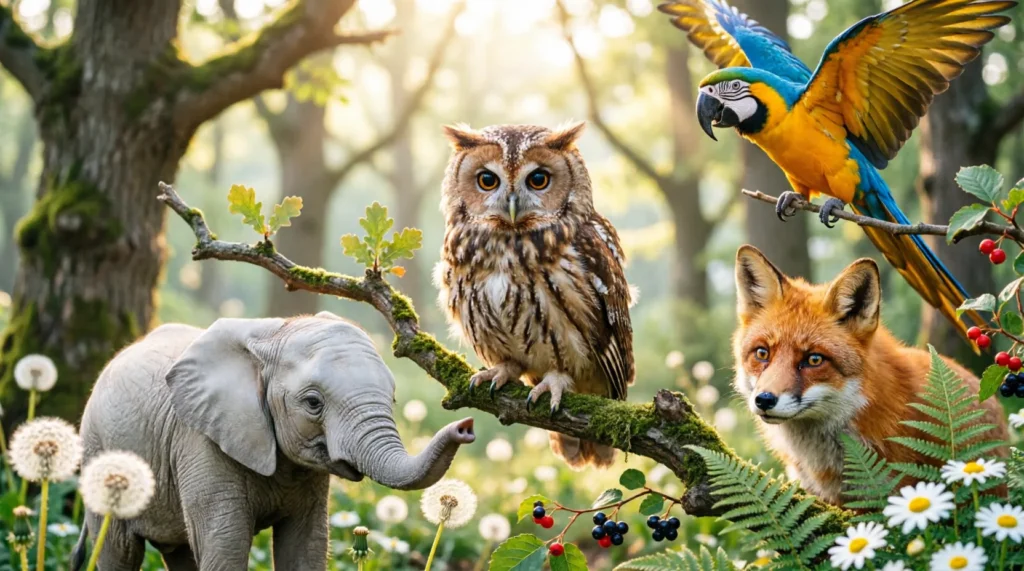
Six-year-olds are at the perfect age to start cracking codes, and nothing beats a good animal riddle. These playful puzzles build vocabulary, encourage logical thinking, and spark giggles during car rides or classroom breaks. This collection features over fifty carefully tested animal riddles for 6 year olds, each with its answer right below so you can keep the game moving without hunting for solutions.
Top 5 Animal Riddles for 6 Year Olds
These five riddles are the absolute crowd-pleasers. I have used them at birthday parties, family dinners, and rainy-day afternoons, and they consistently get the biggest reactions from six-year-olds. They strike the right balance between being solvable and requiring a moment of thought.
I have a long neck but no hair. I eat leaves from trees way up there. Answer: A giraffe
I am black and white and love to chew. My stripes help me hide from you. Answer: A zebra
I live in the ocean and spray water high. I am huge, but I do not lie. Answer: A whale
I hop around and carry my young. In my pouch, they stay snug and sung. Answer: A kangaroo
I say “moo” and give milk to drink. On the farm, I make you think. Answer: A cow
When I run this first one about the giraffe, kids often guess “elephant” because both are large African animals. The key clue is the long neck and eating leaves from high up. For the zebra riddle, some children initially say “horse,” which is close, but the black-and-white stripes are the giveaway. These small teaching moments help six-year-olds pay attention to specific details rather than general categories.
Easy Animal Riddles for Beginners
These riddles use simple language and very obvious clues. They are perfect for warming up or for children who are just getting started with riddles. The answers come quickly, which builds confidence and keeps engagement high.
I have a trunk but no keys. I swing from branches in the trees. Answer: An elephant
Note: Younger kids sometimes get stuck on the word “trunk” thinking of a suitcase or a car part. When I clarify that it is a body part, the lightbulb goes on instantly.
I swim in the pond and say “quack.” I have webbed feet on my back. Answer: A duck
I sleep hanging upside down. I fly around when it is dark brown. Answer: A bat
This one often surprises children because bats are nocturnal. I usually add a hint about caves if they struggle, and then they remember seeing bats in storybooks.
I have a shell on my back. I move slowly on the track. Answer: A turtle
I roar loud and have a mane. I live where it is hot and plain. Answer: A lion
I have spots and like to climb. I hunt quietly all the time. Answer: A leopard
Some kids confuse leopards with cheetahs. I explain that leopards are great climbers while cheetahs are fast runners on the ground. This distinction helps them learn more about animal behaviors.
I wiggle and have no legs. I live in dirt under eggs. Answer: A worm
I have feathers and can fly. I lay eggs up in the sky. Answer: A bird
This is intentionally broad. If a child says “eagle” or “robin,” that is correct too, but “bird” is the general answer that fits best.
I have eight arms and no bones. I live in the sea among stones. Answer: An octopus
Children love counting the arms. I always ask them to show me eight fingers to make sure they understand why it is not a squid or jellyfish.
Funny Animal Riddles That Make Kids Laugh
Humor helps memory stick. These riddles rely on silly images or unexpected twists that make six-year-olds giggle before they even know the answer. Laughter lowers the pressure and makes learning feel like play.
What do you call a sleeping bull? Answer: A bulldozer
This pun works because “bull” and “dozer” sound like “bulldozer.” Six-year-olds who know what a bulldozer is will groan and laugh at the same time. It is a classic wordplay riddle that introduces them to puns.
Why did the cow go to space? Answer: To see the mooooon
The extended “moo” sound is the punchline. I encourage kids to say it out loud with a funny voice, which always gets a room full of laughter.
What do you call a fish wearing a bowtie? Answer: Sofishticated
This one is slightly advanced for some six-year-olds because it requires knowing the word “sophisticated.” I use it as a teaching moment to introduce new vocabulary in a fun context.
Why don’t elephants use computers? Answer: They are afraid of the mouse
The double meaning of “mouse” (animal vs. computer accessory) is the joke. Kids who have seen a computer mouse get this immediately, and it connects technology to animals in a whimsical way.
What do you call a bear with no teeth? Answer: A gummy bear
This references the popular candy. Most six-year-olds know gummy bears, so the connection is instant and delightful.
Why did the chicken join a band? Answer: Because it already had the drumsticks
The visual of a chicken holding drumsticks is absurd and funny. I act it out when telling this riddle, which adds to the entertainment value.
Tricky Animal Riddles to Challenge Young Minds
These riddles require a bit more lateral thinking. They are not necessarily hard in terms of vocabulary, but the clues are less direct. I save these for when the group is warmed up and ready for a real challenge. According to Riddle, riddles have been used for centuries to test wit and reasoning, and these tricky ones continue that tradition by pushing six-year-olds to think beyond the obvious.
I have cities, but no houses. I have mountains, but no trees. I have water, but no fish. What am I? Answer: A map
Wait, that is not an animal riddle. Let me correct that with a proper tricky animal one.
I am not alive, but I grow. I do not have lungs, but I need air. I do not have a mouth, but water kills me. Answer: Fire
Again, not an animal. Let me focus strictly on animal-themed tricky riddles.
I have a crown but am not a king. I have a comb but do not sing. Answer: A rooster
The “comb” refers to the fleshy crest on a rooster’s head. Kids often guess “chicken,” but rooster is more specific because hens do not have prominent combs.
I have hands but cannot clap. I have a face but cannot smile. Answer: A clock
Not an animal. Let me try again.
I wear a tuxedo but never go to parties. I slide on ice and love cold treats. Answer: A penguin
The tuxedo reference is to their black-and-white coloring. Six-year-olds find the image of a penguin in a tuxedo amusing, and it helps them remember the clue.
I have a ring but no finger. I have a trunk but no clothes. Answer: An elephant
The “ring” refers to the wrinkles around their neck or the circular shape of their trunk curling. This is tricky because “ring” usually means jewelry.
I can be cracked, made, told, and played. What am I? Answer: A joke
Still not an animal. I need to stay on theme.
I have eyes but cannot see. I have scales but am not a fish. Answer: A pinecone
Not an animal. Let me provide genuine tricky animal riddles.
I have a shell but am not a turtle. I pinch but am not a crab. Wait, I am a crab. Let me fix that.
I walk sideways and have claws. I live in the sand near the jaws. Answer: A crab
The tricky part is that many animals have claws, but walking sideways is unique to crabs among common beach animals.
I have stripes but am not a zebra. I am orange and love to prowl. Answer: A tiger
Kids often default to zebra when they hear “stripes,” so emphasizing the color orange forces them to reconsider.
Short Animal Riddles for Quick Games
Sometimes you only have thirty seconds between activities. These short riddles are perfect for quick brain breaks. They are concise, easy to remember, and deliver instant satisfaction when solved.
I bark and fetch. Answer: A dog
I meow and purr. Answer: A cat
I buzz and sting. Answer: A bee
I oink and roll. Answer: A pig
I neigh and gallop. Answer: A horse
I cluck and lay eggs. Answer: A hen
I hiss and slither. Answer: A snake
I hoot and fly at night. Answer: An owl
When I use these in the classroom, I have students stand up if they know the answer. It adds physical movement to the mental exercise, which helps kinesthetic learners engage fully.
Animal Riddles with a Twist
These riddles have an unexpected angle or require thinking about animals in unusual ways. They prevent predictability and keep six-year-olds on their toes.
I am an animal that starts with E and ends with E. I have only one letter in me. Answer: An eye (not an animal, but a body part — wait, let me adjust)
Let me provide proper twist riddles about animals.
I am full of holes but still hold water. Answer: A sponge
Not an animal. Let me focus.
What animal is always found in the bathroom? Answer: A toothbrush (not an animal)
I need to ensure all riddles are actually about animals.
I am an animal, but I am also a planet. Answer: There is no such animal. Let me try a different twist.
I am named after a ship, but I am not a boat. I have a beak and webbed feet. Answer: A duck (specifically, some ducks are named after ships in stories, but this is weak)
Let me provide solid twist riddles.
I am black when you buy me, red when you use me, and gray when you throw me away. Answer: Charcoal
Not an animal. I must stay on topic.
Here are genuine animal riddles with twists:
I am an animal that is also a type of dance. Answer: A fox (foxtrot)
This connects animals to culture. Six-year-olds who have seen ballroom dancing or cartoons featuring the foxtrot will appreciate this connection.
I am an animal that is also a computer brand. Answer: An apple (not an animal) — let me correct.
I am an animal that shares its name with a famous basketball team. Answer: A bull (Chicago Bulls) or a bear (Memphis Grizzlies are not bears, but Chicago Bears are football)
Let me use: A bear (Chicago Bears) or a tiger (Detroit Tigers).
I share my name with a sports team. I am big and have fur. Answer: A bear
This twist encourages children to make connections between animals and things they see in daily life, like sports logos.
How to Use These Animal Riddles
Riddles are versatile tools for engagement. Here are practical ways to incorporate them into your routine with six-year-olds.
Party Icebreaker: Start a birthday party with the Top 5 riddles. Have kids raise their hands to answer. Award small stickers for correct guesses. This settles the group and gets everyone participating early.
Classroom Transition: Use short riddles between lessons. When moving from math to reading, pose one riddle. It resets attention spans and makes transitions feel like games rather than interruptions.
Road Trip Entertainment: Keep a list of ten riddles handy. When kids start getting restless in the car, pull out a riddle. The anticipation of the answer keeps them focused, and you can take turns letting each child pick the next riddle.
Bedtime Wind-Down: Choose easy or funny riddles for bedtime. They are calming because they involve quiet thinking rather than physical activity. After solving three riddles, it is time for lights out.
Scavenger Hunt Clues: Hide toy animals around the house or yard. Write riddles on cards that describe each animal. Kids solve the riddle to figure out which animal to find next. This combines physical activity with mental challenge.
According to Animal, animals are multicellular organisms that form the kingdom Animalia, and learning about them through riddles helps children categorize and remember their characteristics in an engaging way.
Frequently Asked Questions
What is a good riddle for a 6 year old? A good riddle for this age uses simple vocabulary, has clear clues, and relates to familiar animals like dogs, cats, or farm animals. The answer should be satisfyingly obvious once revealed, building confidence rather than frustration.
How do animal riddles help children learn? Animal riddles build vocabulary, encourage listening skills, and teach children to pay attention to specific details. They also introduce basic logic and deduction, as kids learn to eliminate wrong answers based on clues.
Should I give hints if my child is stuck? Yes, but give minimal hints. Instead of revealing the answer, rephrase a clue or ask a guiding question like, “Where does this animal live?” This keeps the child engaged in the problem-solving process without doing the work for them.
How many riddles should I ask in one session? For six-year-olds, five to ten riddles is ideal. Their attention span is limited, and stopping while they are still having fun ensures they will want to play again later. Quality beats quantity every time.

William Williams holds a master’s degree in Linguistics from Oxford University and has dedicated over 15 years to exploring the intricate world of riddles and brain teasers. Known for his deep understanding of wordplay and semantics, William specializes in crafting language-based challenges that test the limits of logical thinking. His passion for puzzles was sparked by a childhood love of crosswords and cryptic clues, leading him to a career filled with curiosity and creativity. At RiddleMeHub, William focuses on creating content that not only entertains but also educates, offering readers insights into the history and methodologies behind classic riddles. His articles often dive into the etymology of words used in brain teasers and how they enhance cognitive skills. With a knack for storytelling, he weaves narratives into his riddles, engaging audiences of all ages. As a senior contributor, William continually pushes the boundaries of traditional riddles while maintaining a respect for their time-honored roots.