

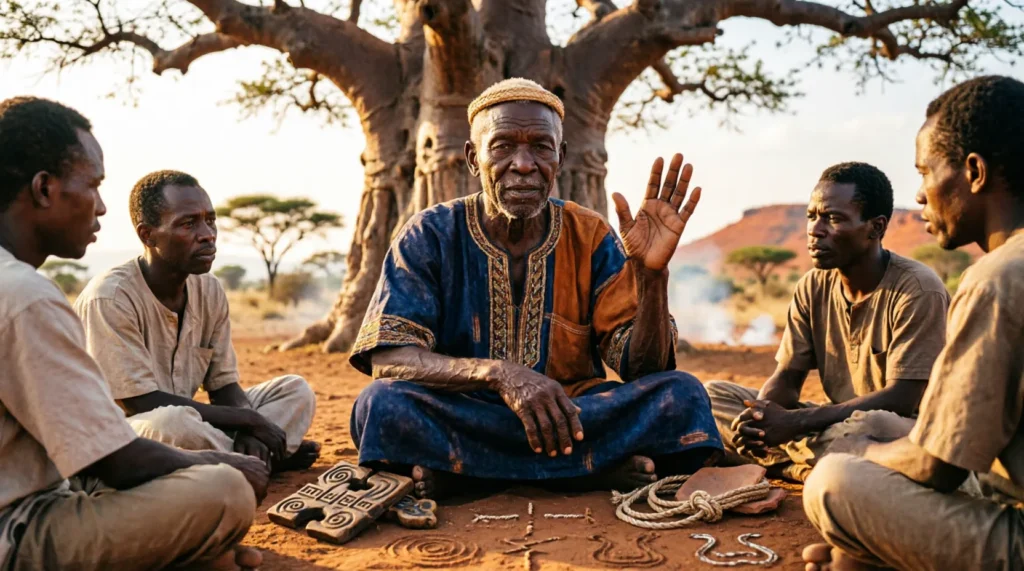
African riddles offer more than just a mental challenge; they provide a window into centuries of oral tradition, community bonding, and sharp observational humor. This collection curates the most engaging african riddles with answers for adults, perfect for sparking conversation at dinner parties or testing your wits during a quiet evening. Unlike simple children’s puzzles, these riddles often rely on metaphor, cultural context, and lateral thinking that rewards mature perspective.
Top 5 African Riddles for Adults
These five riddles represent the cream of the crop, blending poetic imagery with logical twists that have stumped generations. They are excellent starting points for any gathering.
I speak without a mouth and hear without ears. I have no body, but I come alive with wind. What am I? Answer: An echo
The more you take, the more you leave behind. What am I? Answer: Footsteps
I have cities, but no houses. I have mountains, but no trees. I have water, but no fish. What am I? Answer: A map
What belongs to you, but other people use it more than you do? Answer: Your name
I am always hungry, I must always be fed. The finger I touch will soon turn red. What am I? Answer: Fire
Easy African Riddles to Warm Up
Start your session with these accessible riddles. They are designed to build confidence and get everyone participating before moving to the more complex challenges. These are great for mixed groups where some participants may be new to the format.
What has keys but can’t open locks? Answer: A piano
What has a head and a tail but no body? Answer: A coin
What gets wet while drying? Answer: A towel
What goes up but never comes down? Answer: Your age
What has one eye but can’t see? Answer: A needle
What has many needles but doesn’t sew? Answer: A pine tree
What breaks when you say its name? Answer: Silence
What has a neck but no head? Answer: A bottle
Hard African Riddles for Sharp Minds
These riddles require deeper lateral thinking. In my experience running pub quizzes, these are the ones that cause the longest pauses and the most intense debate. They often rely on abstract concepts rather than physical objects.
I am not alive, but I grow; I don’t have lungs, but I need air; I don’t have a mouth, but water kills me. What am I? Answer: Fire
Tester’s Note: When I present this to adults, the most common wrong guess is “a plant.” People fixate on the “grows” part and forget that water usually helps plants. The key is the contradiction of needing air but being killed by water.
What can run but never walks, has a mouth but never talks, has a head but never weeps, has a bed but never sleeps? Answer: A river
I am light as a feather, yet the strongest man cannot hold me for much more than a minute. What am I? Answer: His breath
The person who makes it has no need of it; the person who buys it has no use for it. The person who uses it can neither see nor feel it. What is it? Answer: A coffin
What has a heart that doesn’t beat? Answer: An artichoke
Tester’s Note: This is a classic trick. Adults often overthink it, looking for mechanical or metaphorical answers. The simplicity of the vegetable answer often catches them off guard. It’s a good reminder that sometimes the literal answer is the right one.
I have towns, but no houses. I have mountains, but no trees. I have rivers, but no water. What am I? Answer: A map
What is so fragile that saying its name breaks it? Answer: Silence
I am always coming, but never arrive. What am I? Answer: Tomorrow
Funny African Riddles with a Twist
Humor is a central component of many African oral traditions. These riddles use wordplay and unexpected logic to elicit a laugh along with the solution. They are perfect for breaking the ice.
What has a bottom at the top? Answer: Your legs
Why did the scarecrow win an award? Answer: Because he was outstanding in his field
What do you call a fake noodle? Answer: An impasta
What has four fingers and a thumb, but is not alive? Answer: A glove
What begins with T, ends with T, and has T in it? Answer: A teapot
What kind of room has no doors or windows? Answer: A mushroom
Tester’s Note: This one always gets a groan followed by a laugh. It’s a pun-based riddle that relies on the double meaning of “mush-room.” It’s less about logic and more about linguistic playfulness, which is a staple in many West African riddle traditions.
What has to be broken before you can use it? Answer: An egg
What goes up and down but doesn’t move? Answer: Stairs
Tricky African Riddles That Deceive
These riddles are designed to mislead. They often contain information that seems relevant but is actually a distraction. Pay close attention to the wording.
A man pushes his car to a hotel and tells the owner he’s bankrupt. Why? Answer: He is playing Monopoly
Tester’s Note: This is a favorite for adults because it requires shifting context. Most people assume a real-life scenario involving a mechanical failure or financial ruin. The shift to a game board is the “aha” moment.
You see a boat filled with people. It has not sunk, but when you look again you don’t see a single person on the boat. Why? Answer: All the people were married
What has words, but never speaks? Answer: A book
What can travel all around the world without leaving its corner? Answer: A stamp
What has a face and two hands but no arms or legs? Answer: A clock
What is full of holes but still holds water? Answer: A sponge
What goes through cities and fields, but never moves? Answer: A road
Animal-Themed African Riddles
Animals feature prominently in African folklore and riddles, often serving as metaphors for human behavior or natural phenomena. These riddles celebrate the natural world.
I have a long neck, but I’m not a giraffe. I carry my house on my back. What am I? Answer: A snail
I am black and white and loved all over the world, but I live in China. What am I? Answer: A panda
I have a crown, but I am not a king. I have spurs, but I am not a knight. What am I? Answer: A rooster
Tester’s Note: This riddle plays on the dual meanings of “crown” (comb) and “spurs.” It’s a test of vocabulary and association. Adults often guess “a lion” first due to the “king” association, missing the specific details.
I sleep with my eyes open. What am I? Answer: A fish
I have no legs, but I can climb. I have no wings, but I can fly. What am I? Answer: A snake (in metaphorical sense) or a cloud
What animal is always at a baseball game? Answer: A bat
I am small and can carry things many times my weight. What am I? Answer: An ant
How to Use These Riddles
Integrating these riddles into your social or educational settings can enhance engagement and foster connection. Here are some practical ways to deploy them.
- Dinner Party Icebreakers: Place a card with a riddle at each setting. Guests can discuss their guesses while waiting for food. It shifts the focus from small talk to collaborative problem-solving.
- Classroom Critical Thinking: Use the “Hard” section to teach lateral thinking. Ask students to explain why their initial guess was wrong, which builds metacognitive skills.
- Road Trip Entertainment: Take turns reading riddles aloud. The driver can read, and passengers can compete to answer first. It keeps minds active during long stretches of driving.
- Scavenger Hunt Clues: Use the answer to one riddle as the location for the next clue. For example, if the answer is “a mirror,” hide the next clue behind a mirror.
According to Wikipedia, riddles have historically served as tools for testing wisdom and maintaining social cohesion in many cultures, including those across the African continent. They are not merely games but structured forms of intellectual exchange.
Frequently Asked Questions
What makes a riddle specifically “African”? Many riddles categorized as African originate from oral traditions in regions like West Africa, where they are known as nanan or mibango. They often feature local flora, fauna, and cultural practices. However, many universal riddles have been adopted and adapted into these traditions, sharing themes with global folklore. The style often emphasizes poetic structure and communal participation.
Are these riddles suitable for children? While labeled for adults, many of the “Easy” and “Animal” riddles are appropriate for older children (ages 8+). The “Hard” and “Tricky” sections may require abstract thinking skills that develop in adolescence. Always preview the riddles to match the cognitive level of your audience.
How do I create my own African-style riddle? Start with a common object or concept. Describe it using metaphors related to nature, daily life, or human behavior. Avoid direct descriptions. For example, instead of saying “it has pages,” say “it has leaves but no branches.” Test it on friends to ensure the answer is solvable but not obvious. As noted in cultural studies, the structure of African oral literature often relies on call-and-response patterns, so consider how your riddle invites interaction.
Why are riddles important in adult learning? Riddles encourage flexible thinking and challenge assumptions. For adults, who often rely on established patterns of thought, riddles force a break in routine logic. This can improve problem-solving skills in professional and personal contexts by training the brain to look for alternative solutions.

William Williams holds a master’s degree in Linguistics from Oxford University and has dedicated over 15 years to exploring the intricate world of riddles and brain teasers. Known for his deep understanding of wordplay and semantics, William specializes in crafting language-based challenges that test the limits of logical thinking. His passion for puzzles was sparked by a childhood love of crosswords and cryptic clues, leading him to a career filled with curiosity and creativity. At RiddleMeHub, William focuses on creating content that not only entertains but also educates, offering readers insights into the history and methodologies behind classic riddles. His articles often dive into the etymology of words used in brain teasers and how they enhance cognitive skills. With a knack for storytelling, he weaves narratives into his riddles, engaging audiences of all ages. As a senior contributor, William continually pushes the boundaries of traditional riddles while maintaining a respect for their time-honored roots.