

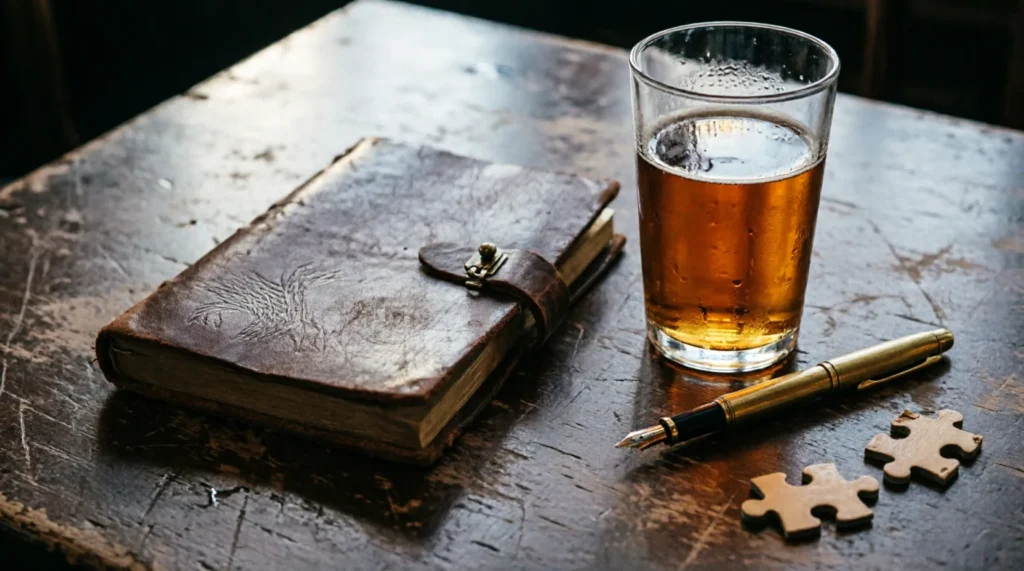
I’ve spent years running pub quizzes, family game nights, and escape rooms, and nothing stalls a lively conversation quite like a brilliantly confusing brain teaser. Here is a curated collection of the best riddles for adults with answers in english, tested in the wild to guarantee a groan, a laugh, or a satisfying “aha!” moment.
Top 5 riddles for adults with answers in english
I have cities, but no houses; mountains, but no trees; and water, but no fish. What am I? Answer: A map. Note: When I run this one with kids, they get frustrated looking for a magical place, but adults usually map out the geography in their heads and solve it in under thirty seconds.
The person who makes it, sells it. The person who buys it never uses it. The person who uses it never knows they are using it. What is it? Answer: A coffin. Note: When I run this at pub quizzes, half the table confidently yells “poison” or “a gift” before realizing the user doesn’t know they’re using it. It is a genuinely hard riddle that looks easy until the final constraint clicks.
I am not alive, but I grow; I don’t have lungs, but I need air; I don’t have a mouth, but water kills me. What am I? Answer: Fire.
What can travel all around the world without leaving its corner? Answer: A postage stamp. Note: This is a classic that relies on spatial reasoning. People always picture a person sitting in a room, completely forgetting about the mail sitting on their desk.
Forward I am heavy, but backward I am not. What am I? Answer: The word “Ton”. Note: My spelling-bee friends always get this instantly, while math folks stare at the ceiling trying to calculate weights. It is a fantastic lateral thinking puzzle that rewards vocabulary over arithmetic.
Hard Riddles for Adults
According to Riddle, these puzzles have historically been used not just for entertainment, but as a test of wisdom or a metaphorical statement in ancient literature. Today, hard riddles serve the same purpose: they force lateral thinking. I always use the “photograph” riddle below to separate the literal thinkers from the logical ones.
A man is looking at a photograph of someone. His friend asks who it is. The man replies, “Brothers and sisters, I have none. But that man’s father is my father’s son.” Who is in the photograph? Answer: His son. Note: People always guess “himself” here. They forget that since he has no siblings, “my father’s son” can only be the speaker himself, making the man in the photo the speaker’s son.
I am a five-letter word. Take away two letters and I am left with one. What am I? Answer: Stone (st-one). Note: This one trips up my adult trivia teams constantly because they assume “left with one” means a single letter remains, rather than the literal word “one”.
What has a head, a tail, is brown, and has no legs? Answer: A penny.
The more of this there is, the less you see. What is it? Answer: Darkness. Note: This is deceptively simple. I’ve seen engineers spend five minutes trying to calculate the volume of a black hole before someone at the table quietly whispers the correct, obvious answer.
I turn once, what is out will not get in. I turn again, what is in will not get out. What am I? Answer: A key.
You see a boat filled with people. It has not sunk, but when you look again you don’t see a single person on the boat. Why? Answer: All the people were married. Note: This is a classic misdirection. People immediately start inventing ghost stories or assuming the boat went underwater, completely missing the linguistic trick on the word “single”.
Tricky Wordplay Riddles
According to English, the language has a massive vocabulary and notoriously inconsistent spelling rules, which makes it the perfect playground for linguistic tricks. When I run wordplay riddles at my local trivia night, the groans are loudest when the answer relies on a double meaning that was hiding in plain sight.
What word in the dictionary is always spelled wrong? Answer: Wrong.
What has many keys but can’t open a single lock? Answer: A piano.
I am an odd number. Take away a letter and I become even. What number am I? Answer: Seven. Note: Nine-year-olds usually solve this in about ten seconds by sounding the words out, while adults try to do complex algebra in their heads.
What starts with an E, ends with an E, but only contains one letter? Answer: An envelope.
What begins with T, ends with T, and has T in it? Answer: A teapot.
Which letter of the alphabet has the most water? Answer: The C (sea).
Funny Riddles for Grown-ups
Sometimes you just need a quick laugh to break the tension at a dinner party. These are less about taxing your brain and more about enjoying the pun. I use these as warm-ups before hitting my guests with the harder logic puzzles.
What do you call a fake noodle? Answer: An impasta.
Why don’t scientists trust atoms? Answer: Because they make up everything.
What do you call a bear with no teeth? Answer: A gummy bear.
How do you make a tissue dance? Answer: You put a little boogie in it.
What has four wheels and flies? Answer: A garbage truck. Note: Kids usually guess “a flying car,” but the collective adult groan when they realize it’s about literal flies buzzing around trash is unmatched.
Why did the scarecrow win an award? Answer: Because he was outstanding in his field.
Short & Snappy Riddles
These are perfect for rapid-fire rounds when you don’t have time for a three-paragraph setup. Keep the pace moving quickly and don’t let people linger on a wrong guess for more than ten seconds.
What gets wetter the more it dries? Answer: A towel.
What has hands but cannot clap? Answer: A clock.
What has a neck but no head? Answer: A shirt.
What has to be broken before you can use it? Answer: An egg.
What goes up but never comes down? Answer: Your age.
What can you catch, but not throw? Answer: A cold.
How to use these riddles
- Pub Trivia and Parties: Break your guests into teams and use the “Hard” section as a tie-breaker round. The coffin and photograph riddles are guaranteed to spark loud debates across the table, and the losing team usually demands a rematch.
- Road Trips: Long drives are the perfect place for short, snappy brain teasers. Have the passenger read them out while the driver tries to guess before the next exit. It keeps the driver engaged without distracting them from the road.
- Scavenger Hunts: Print out the tricky wordplay riddles and tape them to household items. For example, tape the “keys but no locks” riddle to your piano or keyboard to lead players to their next clue.
- Dinner Party Seating: Write one riddle on the back of each guest’s place card. They have to solve it to find out which appetizer they are allowed to eat first, or to reveal a small party favor hidden at their seat. It immediately gets strangers talking to one another before the main course arrives.
- Classrooms and Workshops: Use the funny riddles as icebreakers before a heavy meeting or lesson. A quick pun lowers the affective filter and gets people comfortable speaking up in front of their peers.
Frequently Asked Questions
What is a good riddle for adults that isn’t childish? The best adult riddles rely on logic, lateral thinking, or dark humor rather than simple rhymes. The coffin riddle and the photograph riddle are excellent because they require you to parse complex family trees or existential constraints, which feels much more mature than guessing a vegetable.
How do these riddles actually work on the brain? Riddles force you to overcome “functional fixedness”—the cognitive bias that limits a person to using an object or word only in the way it is traditionally used. When a riddle asks about “keys” that don’t open locks, your brain has to suppress the image of a metal door key and search your mental database for alternative definitions.
Why do I always guess the wrong answer first? Because riddle-writers intentionally front-load the clues to trigger your brain’s most common associations. If a riddle mentions “flying” and “wings,” your brain immediately pictures a bird. The trick is to pause, ignore your first instinct, and look for the secondary, literal, or pun-based meaning of the words provided.
Can I use these for a corporate team-building event? Absolutely. The short and funny sections are perfect for corporate environments because they are clean, quick, and encourage collaborative problem-solving without making anyone feel singled out if they get it wrong. They build camaraderie without the pressure of a high-stakes competition.
Are there any riddles that are genuinely impossible to solve? Most riddles are designed to be solved eventually, but some are “anti-riddles” or paradoxes meant to have no logical answer. However, every single riddle in the collection above has a verified, concrete answer. If you are stuck, the trick is almost always to stop thinking about the literal objects mentioned and start thinking about the words themselves.

Joshua Wilson is a former engineer turned puzzle enthusiast with over eight years of experience in the world of riddles and brain teasers. Holding a degree in Mechanical Engineering from MIT, Joshua’s technical background influences his approach to crafting intricate logic puzzles and spatial challenges. His journey into the realm of riddles began as a personal hobby, which soon evolved into a professional passion for dissecting the mechanics of problem-solving. At RiddleMeHub, Joshua specializes in puzzles that require a methodical approach, often drawing inspiration from engineering principles and scientific concepts. His content is characterized by its engaging complexity and educational value, designed to stimulate critical thinking and creativity. Joshua is committed to inspiring curiosity and wonder, encouraging readers to embrace the joy of discovery through the lens of puzzling. As an author, he brings a fresh perspective to traditional brain teasers, integrating modern techniques and interactive elements to captivate a wide audience.