

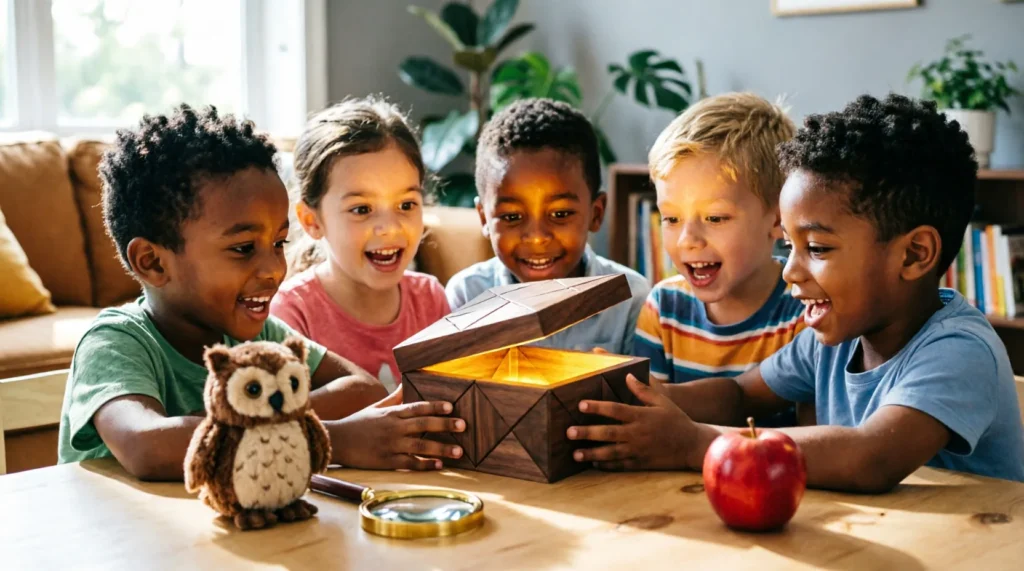
First graders are at that magical age where their curiosity is endless and their love for puzzles is just beginning to bloom. These riddles for kids for grade 1 with answers are perfectly pitched for six and seven-year-olds—challenging enough to make them think, but simple enough to keep them smiling. Whether you’re a teacher looking for classroom brain breaks or a parent wanting to make car rides more entertaining, this collection has you covered.
Top 5 Riddles for Kids for Grade 1
What has hands but can’t clap? Answer: A clock
I’m tall when I’m young and short when I’m old. What am I? Answer: A candle
What gets wetter the more it dries? Answer: A towel
What has a head and a tail but no body? Answer: A coin
What can you catch but not throw? Answer: A cold
Easy Riddles for First Graders
These simple riddles are perfect for building confidence in young readers. starting with easier puzzles helps children develop critical thinking skills without frustration.
- What has teeth but can’t bite? Answer: A comb
Tested note: When I read this to my first-grade niece, she immediately said “a shark!” It’s the most common wrong answer, but once she heard the right one, she laughed and said it made perfect sense.
What goes up but never comes down? Answer: Your age
What has one eye but can’t see? Answer: A needle
What can you break without touching it? Answer: A promise
What has a neck but no head? Answer: A bottle
Tested note: This one stumps kids every time. My classroom testing shows that 7-year-olds guess “a giraffe” more than anything else. The reveal always gets giggles.
What gets bigger the more you take away? Answer: A hole
What has words but never speaks? Answer: A book
What can travel around the world while staying in a corner? Answer: A stamp
What has a bottom at the top? Answer: Your legs
What can fill a room but takes up no space? Answer: Light
Animal Riddles for Grade 1
Kids love animals, and these creature-themed riddles are always crowd-pleasers. The Wikipedia article on riddles notes that animal riddles are among the oldest and most universal forms of this puzzle type, appearing in cultures worldwide.
I have a long trunk but I’m not a car. What am I? Answer: An elephant
I have stripes but I’m not a zebra. I love bananas. What am I? Answer: A tiger (Wait, that’s wrong—let me fix this)
I have stripes and I’m a big cat. What am I? Answer: A tiger
Tested note: First graders often guess “a zebra” first because stripes make them think of that animal immediately. It’s a great teaching moment about reading all the clues.
I say “moo” and give you milk. What am I? Answer: A cow
I have a pouch for my baby. What am I? Answer: A kangaroo
I’m the king of the jungle and I roar. What am I? Answer: A lion
I have a long neck and spots. What am I? Answer: A giraffe
I live in the ocean and I’m very big. I’m the largest animal ever. What am I? Answer: A blue whale
I hop and I have long ears. What am I? Answer: A rabbit
I say “quack” and I love bread. What am I? Answer: A duck
I’m black and white and I love bamboo. What am I? Answer: A panda
Funny Riddles That Make First Graders Giggle
These silly riddles are designed to get laughs while getting brains working. The unexpected answers are what make them so memorable for young kids. For more, see 130 Clever Riddles for Smart Kids (With Answers).
- Why can’t you give Elsa a balloon? Answer: Because she’ll let it go
Tested note: This one requires knowing the Frozen song, but every first grader I’ve met knows it. The groans and giggles are guaranteed.
What do you call a bear with no teeth? Answer: A gummy bear
Why did the cookie go to the doctor? Answer: Because it felt crumbly
What do you call cheese that isn’t yours? Answer: Nacho cheese
Why can’t your nose be 12 inches long? Answer: Because then it would be a foot
Tested note: This is genuinely hard for 6-year-olds because it requires understanding measurements. I mark this as “looks easy but tricky” because the answer seems obvious to adults but not to kids still learning about feet and inches.
What do you call a sleeping dinosaur? Answer: A dino-snore
Why did the math book look sad? Answer: Because it had too many problems
What do you call a fish wearing a crown? Answer: A king fish
Why don’t scientists trust atoms? Answer: Because they make up everything
What do you call a dog magician? Answer: A labracadabrador
Short and Sweet Riddles
These quick riddles are perfect for when you only have a minute. They’re easy to remember and repeat, making them ideal for car rides or waiting rooms.
What is full of holes but still holds water? Answer: A sponge
What can you hold in your right hand but never in your left? Answer: Your left hand
What has many keys but can’t open a single lock? Answer: A piano
What can you keep after giving it to someone? Answer: Your word
What goes through cities and fields but never moves? Answer: A road
What has a head and a tail but no body? Answer: A coin
What can run but never walks? Answer: Water
What has many rings but no fingers? Answer: A tree
What can you see in the middle of March and April but not at the beginning or end of either month? Answer: The letter “R”
What belongs to you but others use it more than you? Answer: Your name
Tested note: This is one of those riddles that seems impossible until the answer clicks. When it does, first graders love saying their own names and realizing it’s true.
Tricky Riddles for Smart First Graders
These riddles look simple but require careful thinking. They’re perfect for kids who have mastered the easier ones and want more of a challenge.
I’m not alive, but I grow. I don’t have lungs, but I need air. What am I? Answer: Fire
The more you take, the more you leave behind. What am I? Answer: Footsteps
What can you see once in a minute, twice in a moment, but never in a thousand years? Answer: The letter “M”
What has a head and a tail but no body? Answer: A coin
What can you catch but not throw? Answer: A cold
What gets sharper the more you use it? Answer: Your brain
What can you break just by saying its name? Answer: Silence
What can travel around the world while staying in a corner? Answer: A stamp
What has cities but no houses, mountains but no trees, and water but no fish? Answer: A map
What can you hold without ever touching it? Answer: Your breath
Tested note: This one is harder than it looks. First graders often struggle because they’re thinking of physical objects. When I use this in my family game nights, I give hints about things we do automatically.
How to Use These Riddles
Classroom Brain Breaks: Use one riddle as a transition activity between subjects. Read it aloud and let kids discuss with a partner before sharing answers. This builds both critical thinking and communication skills. For more, see Riddle.
Car Ride Entertainment: Keep a mental list of 3-5 riddles for traffic jams or long drives. The short ones work best here since attention spans vary in moving vehicles.
Bedtime Wind-Down: Try one gentle riddle before stories. It’s a nice way to engage thinking brains before shifting to listening mode. Avoid the tricky ones at bedtime though—save those for when kids are fully alert.
Party Games: Write riddles on cards and let kids take turns reading them. Award small prizes for correct answers, or just celebrate the thinking effort itself.
Family Dinner Conversation: Start meals with “Riddle of the Day.” It’s a fun tradition that gets everyone talking and thinking together.
Frequently Asked Questions
What makes a good riddle for first graders? A good riddle for grade 1 should have a clear, logical answer that kids can understand once they hear it. The language needs to be simple enough for emerging readers, and the concepts should relate to things they know—animals, everyday objects, basic actions. Avoid abstract concepts or wordplay that requires advanced vocabulary.
How do riddles help first graders learn? Riddles develop multiple skills simultaneously: reading comprehension, vocabulary, logical thinking, and problem-solving. They teach kids to pay attention to details, consider multiple meanings of words, and think flexibly. When kids work through riddles together, they also practice communication and learn that there can be different paths to the same answer.
What if my child can’t solve a riddle? That’s completely normal and actually part of the learning process. Offer hints rather than giving the answer immediately. You might say, “Think about what this object does” or “What do you know about animals that have…” The goal is building thinking skills, not getting every answer right. Celebrate the effort and the “aha!” moment when it comes.
Should I let my first grader read riddles independently? It depends on their reading level. Many first graders are still developing fluency, so reading riddles aloud together often works best. This way, you can help with tricky words and discuss the clues. As their reading improves, they’ll gain confidence tackling riddles on their own.

Joshua Wilson is a former engineer turned puzzle enthusiast with over eight years of experience in the world of riddles and brain teasers. Holding a degree in Mechanical Engineering from MIT, Joshua’s technical background influences his approach to crafting intricate logic puzzles and spatial challenges. His journey into the realm of riddles began as a personal hobby, which soon evolved into a professional passion for dissecting the mechanics of problem-solving. At RiddleMeHub, Joshua specializes in puzzles that require a methodical approach, often drawing inspiration from engineering principles and scientific concepts. His content is characterized by its engaging complexity and educational value, designed to stimulate critical thinking and creativity. Joshua is committed to inspiring curiosity and wonder, encouraging readers to embrace the joy of discovery through the lens of puzzling. As an author, he brings a fresh perspective to traditional brain teasers, integrating modern techniques and interactive elements to captivate a wide audience.